
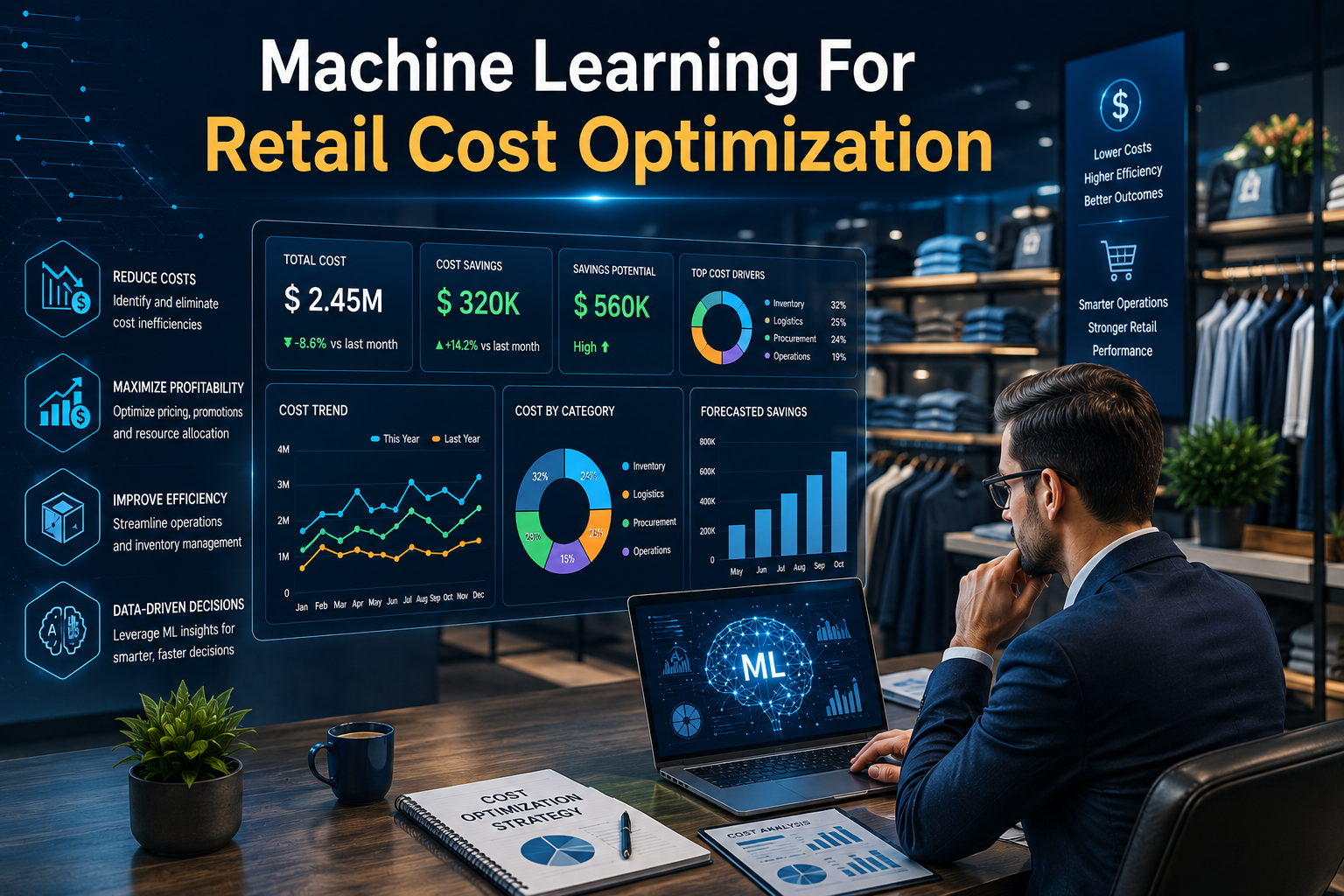
Retailers face constant pressure to protect margins while keeping prices attractive, products available, and service levels strong. Procurement expenses, storage charges, transportation fees, labor costs, returns, markdowns, and promotional spending can quickly reduce profitability. Machine learning offers a more responsive approach by examining large volumes of operational and commercial data, identifying patterns, estimating future outcomes, and recommending actions that can reduce unnecessary spending without weakening the customer experience.
Retail Cost Optimization
Why Retailers Need A Smarter Cost Strategy?
Purchasing, merchandising, logistics, stores, e-commerce, customer service, and finance influence one another. A lower supplier price may create larger minimum order quantities, while aggressive promotions may increase returns, warehouse workload, or delivery demand. Cutting labor too deeply can also reduce service quality and create longer fulfillment times. Machine learning helps retailers study these relationships together. It can compare operational choices, estimate likely financial effects, and highlight trade-offs before leaders commit resources.
Reducing Inventory Carrying Costs
Excess inventory ties up capital and creates additional storage, handling, insurance, shrinkage, and markdown exposure. Insufficient stock can cause lost sales and expensive emergency replenishment. Machine learning can forecast demand at a detailed level by considering seasonality, local patterns, promotions, holidays, product relationships, and recent sales behavior. These forecasts can guide reorder quantities and safety-stock levels according to expected variability. Retailers can then maintain a healthier balance between availability and working capital.

Building A Reliable Data Foundation
Useful cost intelligence starts with dependable information. Retailers should bring together transaction data, product attributes, supplier terms, inventory positions, transportation records, warehouse activity, workforce schedules, promotion details, returns, and financial measures. Data quality checks should identify missing values, inconsistent product codes, duplicate transactions, unusual timestamps, and outdated supplier information. A shared structure also makes it easier to connect expenses with products, locations, channels, and activities.
Improving Warehouse And Fulfillment Efficiency
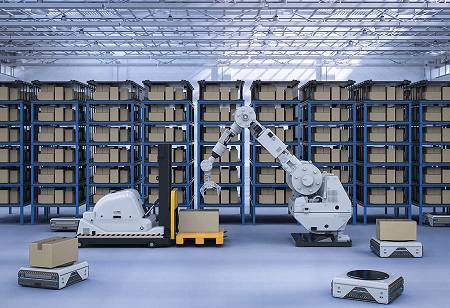
Warehouses generate costs through receiving, put-away, picking, packing, staging, handling, and returns processing. Machine learning can study order characteristics, product locations, worker activity, travel distances, and shipment patterns to identify inefficient processes. Predictive models can anticipate workload by time, allowing managers to plan labor and equipment more effectively. Intelligent slotting can place frequently purchased items in convenient locations, while order clustering can reduce unnecessary movement.
Managing Returns And Reverse Logistics
Machine learning can identify patterns associated with elevated return rates by product, channel, size, seller, location, or order characteristic. These signals can help retailers investigate preventable causes such as unclear product information, packaging problems, inaccurate specifications, or fulfillment errors. Predictive models can also estimate return volumes and help operations prepare capacity. Reducing avoidable returns improves margins while creating a smoother experience for shoppers.
Detecting Cost Anomalies
Unexpected spending often signals a process problem that deserves attention. An alert might reveal a sudden carrier charge increase, abnormal product waste, repeated supplier discrepancies, or a sharp rise in overtime. Early detection gives teams time to investigate the cause before a small issue becomes a material financial burden. This proactive approach strengthens financial control and reduces dependence on month-end reporting.

Using Scenario Analysis For Better Decisions
Retail leaders frequently face choices with uncertain consequences. They may need to decide whether to change a supplier, adjust safety stock, consolidate shipments, alter store hours, or modify a promotion. Machine learning can support scenario analysis by estimating how different actions may affect cost, availability, sales, and service. Decision-makers can compare alternatives before implementation and select an option that fits the organization’s priorities. Scenario modeling does not remove uncertainty, but it provides a stronger evidence base for managing it.
Supporting Real-Time Cost Decisions
Machine learning systems connected to timely operational data can provide updated predictions and alerts as conditions evolve. Managers can then respond sooner, redirect inventory, adjust fulfillment choices, revise labor plans, or investigate unusual spending. Faster feedback turns cost management into an ongoing operating capability.

Connecting Cost Optimization With Customer Experience
Cost reduction should never operate independently from customer value. A cheaper fulfillment method may create slower delivery, while lower inventory can increase stockouts. Machine learning helps retailers measure these trade-offs by connecting operational expenses with service indicators such as availability, delivery speed, cancellation rates, returns, and satisfaction. Leaders can set guardrails that prevent cost initiatives from damaging important customer outcomes. This creates a balanced strategy in which efficiency supports the shopping experience instead of competing with it.
Measuring The Financial Impact
A machine learning initiative needs clear financial measures. Retailers can track changes in procurement expense, inventory carrying cost, fulfillment cost per order, transportation spending, markdown losses, return expense, labor productivity, and overall contribution margin. Teams should compare Retail Cost Optimization results with a reliable baseline and separate model-driven improvement from changes caused by market conditions. Monitoring model accuracy also matters because weak predictions can lead to poor decisions.

Conclusion
Machine learning gives retailers a practical way to understand where money is spent, why costs change, and which actions can improve financial performance. From procurement and inventory to transportation, labor, promotions, returns, and store operations, predictive intelligence can uncover savings opportunities that traditional reporting may overlook. The most effective Retail Cost Optimization strategy does not pursue the lowest possible expense at any price. Instead, it balances efficiency with product availability, service quality, customer satisfaction, and sustainable growth. When retailers combine reliable data, strong governance, human judgment, and continuously improving models, machine learning can become a lasting advantage for profitable operations.