
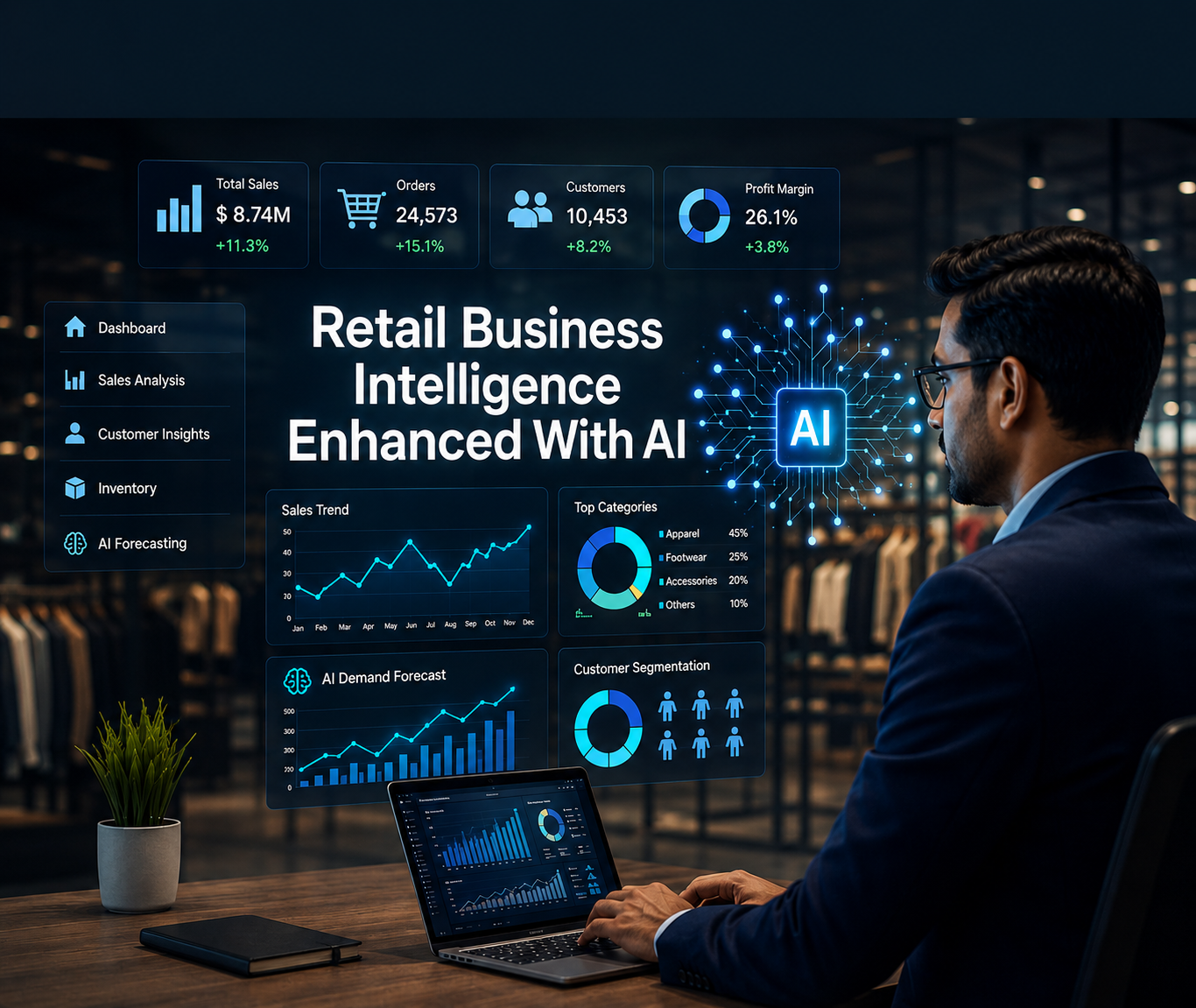
Retail businesses generate information from point-of-sale transactions, websites, mobile applications, inventory systems, customer interactions, marketing campaigns, and supply chains. Turning this growing volume of information into useful knowledge can be difficult when teams depend on disconnected reports or manual analysis. Retail Business Intelligence, enhanced with artificial intelligence, gives companies a stronger way to interpret information, identify meaningful patterns, and support timely decisions. By combining business intelligence with machine learning and predictive analytics, retailers can move beyond understanding what happened and gain better visibility into what may happen next.
Retail Business Intelligence
Why AI-Enhanced BI Matters for Retailers?
AI Demand Forecasting
Demand forecasting is one of the most useful applications of AI in retail intelligence. Models can consider historical sales, seasonal cycles, promotions, product launches, customer activity, and other relevant variables when estimating future demand. Forecasts can be updated as new information becomes available, making them more responsive than static planning methods. Better visibility into expected demand can help retailers coordinate purchasing, inventory, staffing, warehousing, and fulfillment activities.
Improving Sales Analysis
Sales data can reveal which products perform well, which categories are slowing down, and where revenue is changing. AI can examine sales patterns across periods, stores, channels, product groups, and customer segments to uncover relationships that standard reports may overlook. It can also identify unusual changes and help explain which factors may be associated with a shift. With these insights, sales teams can make more informed decisions about product focus, promotional activity, and market opportunities.

Pricing And Promotion Intelligence
Pricing decisions require a clear understanding of demand, competition, inventory, customer sensitivity, and profitability. AI can analyze previous price changes and promotional results to estimate how shoppers may respond to different offers. Business intelligence dashboards can combine these findings with margin information and sales performance. This helps pricing teams evaluate potential actions more carefully and avoid relying only on fixed discount rules or intuition.

Inventory Management
Inventory has a direct effect on both customer satisfaction and financial performance. Too much stock increases holding costs, while insufficient availability can result in lost sales. AI-enhanced BI can connect sales performance with current inventory, replenishment schedules, supplier lead times, and demand forecasts. This makes it easier to identify products that may need attention and prioritize actions based on expected business impact. Retailers can therefore move toward a more proactive approach to stock management.
Marketing Performance Analysis
Retail marketing involves many campaigns, audiences, channels, and creative approaches. AI can help compare performance across these variables and identify which activities are associated with stronger engagement or conversion. It can also detect changes in customer response over time. When marketing intelligence is connected with sales information, retailers can evaluate campaigns based on business outcomes rather than focusing only on clicks, impressions, or other surface-level metrics.

Personalized Retail Experiences
Personalization becomes more effective when it is supported by accurate behavioral analysis. AI can estimate which products, promotions, or content may be relevant to different shoppers based on their previous activity and current interests. These recommendations can be used across websites, mobile applications, email campaigns, and loyalty programs. A well-designed system can improve relevance without requiring employees to manually review every customer’s history.
Supply Chain Visibility
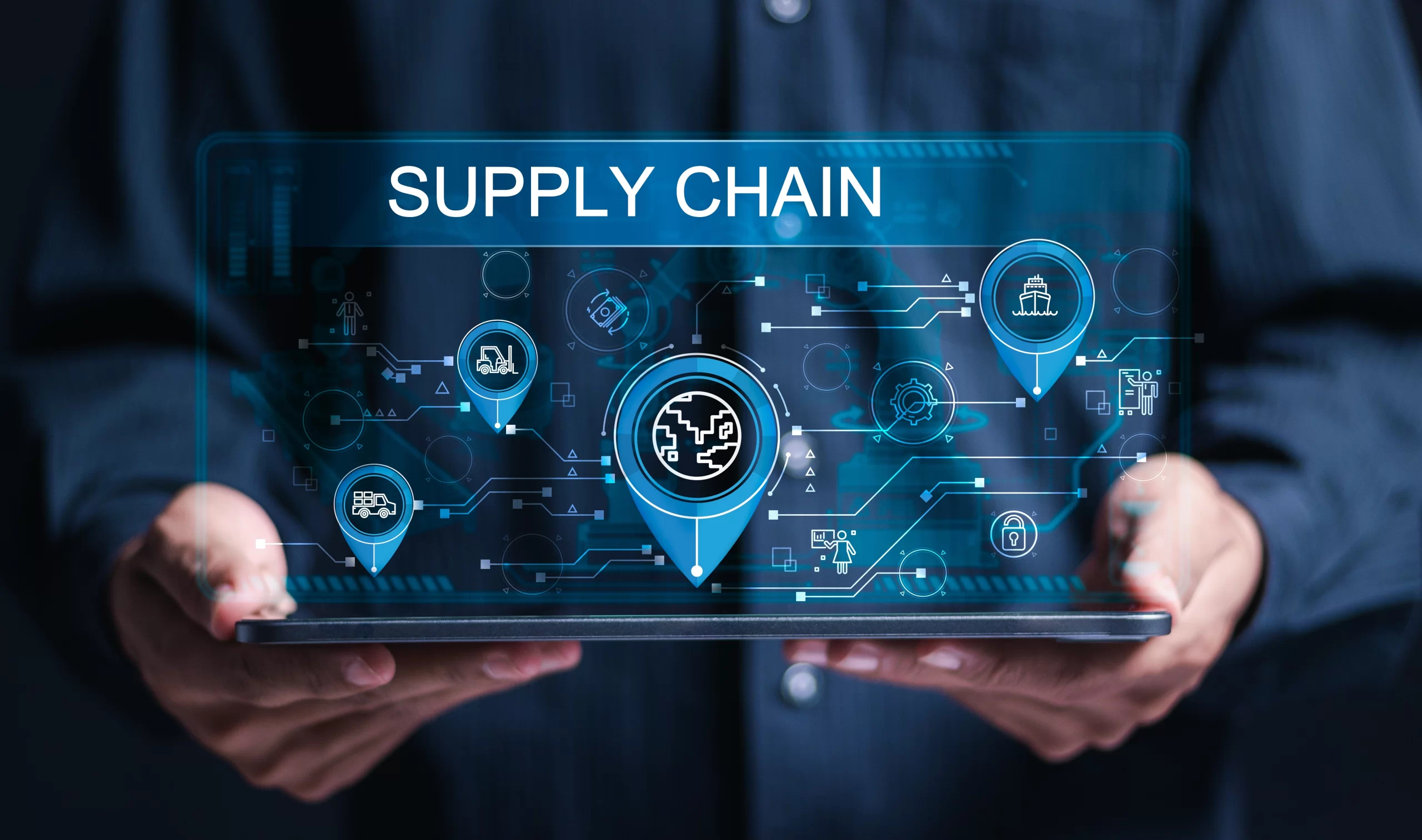
Retailers need visibility across purchasing, suppliers, warehouses, transportation, and store or online fulfillment. AI-enhanced BI can bring information from these areas together and highlight delays, unusual movement, or emerging supply risks. Predictive analysis can also help estimate where pressure may develop before it becomes a major operational problem. Better visibility gives procurement and logistics teams more time to evaluate alternatives and protect product availability.
Real-Time Business Insights
Retail conditions can change quickly, especially during seasonal events, major campaigns, product launches, and high-traffic periods. Real-time intelligence allows businesses to monitor important signals as they develop rather than waiting for scheduled reports. AI can prioritize unusual changes and send alerts when important thresholds are reached. This responsiveness helps managers focus on issues that may require immediate attention while avoiding unnecessary manual monitoring.

Store-Level And Regional Analysis
Retail performance can vary significantly between locations because of local preferences, demographics, competition, weather, events, and purchasing habits. AI can compare stores and regions to identify patterns that may otherwise remain hidden within company-wide figures. Managers can use these insights to adjust assortments, inventory allocation, staffing, and promotional activity. Regional analysis can also help businesses understand whether a trend is broad or concentrated in specific markets.
Detecting Anomalies And Business Risks
AI anomaly detection can identify unexpected shifts in sales, returns, inventory movement, customer activity, or operational performance. Business teams can review these alerts and determine whether they reflect a genuine risk, a temporary event, or a data issue. Early detection can reduce the time between the appearance of a problem and the start of corrective action.
Data Integration And Quality
Retailers should connect reliable data sources and maintain consistent product, customer, transaction, inventory, and supplier records. Duplicate entries, missing values, delayed updates, and inconsistent definitions can reduce the usefulness of analytical results. Strong data governance and regular validation are therefore essential for building confidence in AI insights.
Conclusion
Retail Business Intelligence Enhanced with AI can help retailers transform complex information into clearer, more timely business insight. By combining traditional reporting with machine learning, predictive analytics, anomaly detection, and intelligent recommendations, organizations can improve decisions across sales, inventory, marketing, pricing, customer engagement, and supply chain operations. Successful implementation depends on trustworthy data, clear objectives, appropriate human oversight, and continuous measurement. When used thoughtfully, AI-enhanced intelligence can help retailers respond faster, plan with greater confidence, and build stronger long-term performance.