
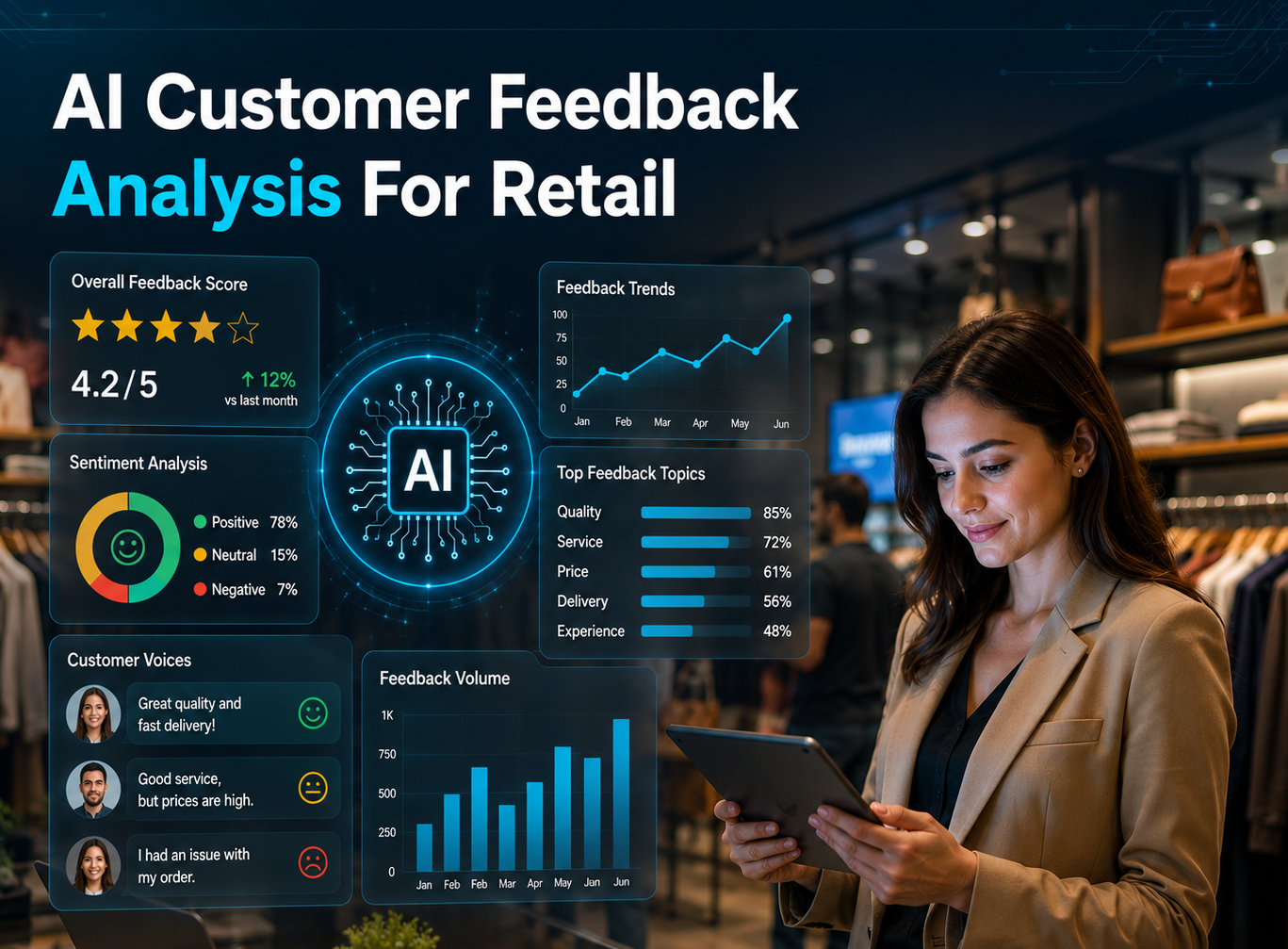
Retail organizations receive customer opinions through many touchpoints, including product reviews, surveys, support conversations, social channels, ratings, and direct messages. The challenge is turning this constant stream of language into information that teams can actually use. AI analysis provides a structured way to identify what shoppers value, where frustration is increasing, and which parts of the customer journey deserve attention. Instead of treating feedback as isolated comments, retailers can use it as an ongoing source of insight for improving service, products, operations, and loyalty.
Retail Customer Feedback Analysis
How Does AI Feedback Analysis Work?
An effective AI workflow begins by gathering feedback from relevant customer touchpoints, preparing the information for analysis, identifying sentiment and subjects, detecting patterns, and connecting those findings with business action. Natural language processing helps systems understand written language, while machine learning can classify comments into useful categories. Trend monitoring then reveals whether an issue is becoming more common or improving after an intervention. The complete workflow is most valuable when automated findings are reviewed alongside business context, allowing teams to move from raw comments to informed action.
Collecting Customer Voice Data
The process begins by bringing feedback into a usable analytical environment. Sources may include website reviews, mobile applications, email responses, loyalty-program surveys, customer service records, social channels, marketplace ratings, and in-store questionnaires. A strong program does not treat every channel as identical; it preserves useful context such as product category, location, date, and interaction type. These stages work best as a connected workflow rather than as independent activities. Data quality affects classification, classification affects trend detection, and trend detection determines whether teams can take meaningful action. A consistent process therefore helps turn raw customer language into dependable business insight.

Detecting Trends Over Time
A single complaint may not indicate a systemic issue. However, a steady increase in comments about the same subject can be significant. AI assisted monitoring can compare feedback across days, weeks, campaigns, product launches, locations, or seasons, allowing teams to investigate changes while they are still manageable.
Identifying Topics and Recurring Themes
A useful system goes beyond asking whether feedback is positive or negative. It can determine what customers are discussing. Common themes might include product quality, pricing, delivery speed, packaging, store cleanliness, staff helpfulness, website navigation, payment problems, returns, stock availability, or loyalty benefits.
Key Applications Across Retail
Product And Merchandising Decisions
Customer comments can reveal which product attributes matter most. Shoppers may praise durability, criticize sizing, request additional colors, or mention packaging concerns. Merchandising teams can use these patterns alongside sales and inventory information when evaluating assortment decisions. The same analytical foundation can support different departments without requiring every team to interpret feedback from scratch. Merchandising, operations, customer care, digital teams, and marketing can work from a shared understanding of customer concerns while still focusing on the issues that fall within their responsibilities.

Store-Level Experience Monitoring
For retailers with multiple locations, feedback can be compared by branch or region. One store may receive strong comments about staff assistance, while another could receive repeated criticism about queues or availability. Localized insight makes it easier to investigate operational differences.
Brand And Campaign Evaluation
Marketing campaigns can generate thousands of reactions in a short period. Sentiment and topic analysis can help teams understand how audiences interpret an offer, message, promotion, or product launch instead of relying solely on clicks and impressions.

Customer Service Improvement
Service conversations provide direct evidence of customer expectations. AI can categorize recurring questions and complaints, helping leaders identify training gaps, policy confusion, slow response points, or processes that create unnecessary effort for shoppers.
Digital Shopping Experience
Online customers frequently comment on search, navigation, payment, delivery tracking, account access, and returns. An intelligent analysis layer can group these remarks and show where the digital journey creates friction.
Benefits
AI analysis can reduce the time required to organize feedback while giving decision-makers a clearer view of recurring issues. It can improve prioritization, support earlier detection of emerging concerns, provide more consistent classification, and make large collections of customer comments easier to interpret. The greatest value comes when these capabilities lead to measurable action, such as resolving recurring service problems, improving product information, reducing customer effort, or strengthening the experience after a purchase. In this way, automation becomes a support system for continuous improvement rather than simply another reporting tool.
Effective Feedback Program
A successful program starts with clear objectives and a practical classification structure. Retailers should define the questions they want feedback to answer, decide which themes require attention, establish ownership for important issues, and create a process for reviewing outcomes. Because customer language and business priorities change, the framework should be reviewed periodically so that important subjects remain relevant and useful.

Conclusion
AI customer feedback analysis gives retailers a practical way to understand large and varied collections of customer opinions. By combining language processing, sentiment analysis, theme detection, trend monitoring, and human expertise, organizations can identify meaningful patterns and connect them with specific improvements. The real value of Retail Customer Feedback Analysis is its ability to make the customer voice part of everyday decision-making. When supported by good data, responsible governance, and clear ownership, AI can help retailers respond more intelligently to expectations while continuously improving the overall customer experience.