
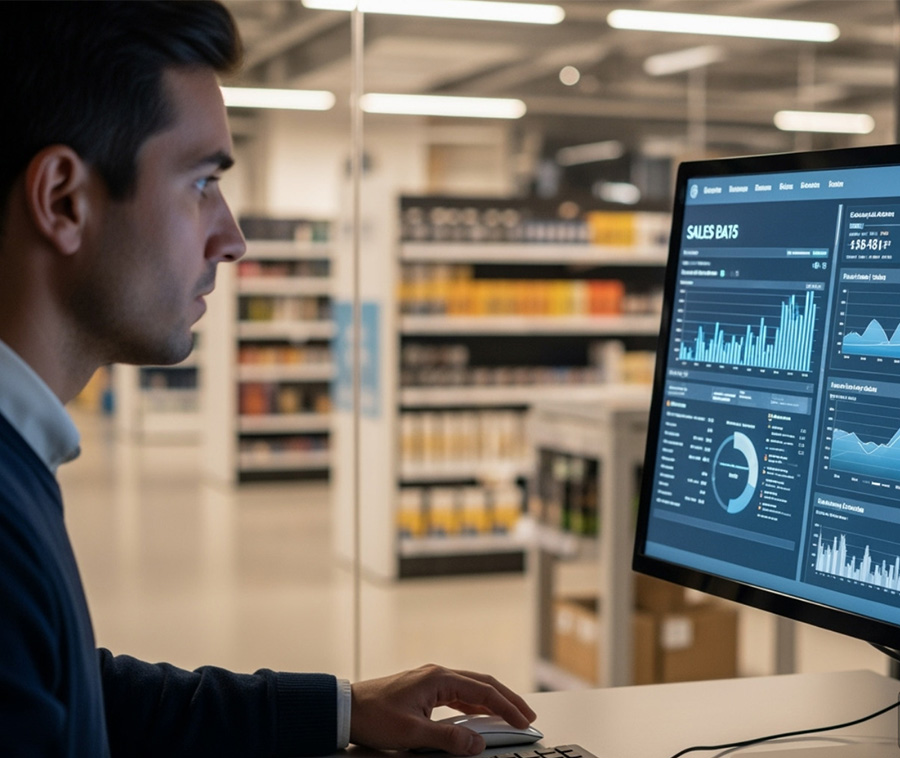
Customer behavior changes quickly, product lifecycles are shorter, and competition is intense. Retailers need accuracy, speed, and adaptability. This is where AI-Driven Demand Forecasting becomes a critical business capability. By using artificial intelligence, digital retail platforms can predict future demand with greater precision. These insights help businesses plan inventory, optimize pricing, and improve customer satisfaction. More importantly, AI transforms raw data into actionable intelligence that supports smarter decisions.
AI Demand Forecasting in Retail
Digital retail platforms operate in real time. Promotions, seasonal trends, and social influence can shift demand overnight. AI helps retailers respond faster by providing timely and precise insights.
-
Reduced inventory waste.
-
Improved order fulfillment.
-
Better cash flow management.
-
Higher customer retention.
How AI Enhances Forecast Accuracy?
Traditional models rely heavily on past averages. AI takes a broader and deeper view. It processes large volumes of structured and unstructured data at once. By combining these inputs, AI builds forecasts that reflect current market dynamics. This leads to better planning and fewer surprises.
-
Purchase history.
-
Browsing patterns.
-
Search behavior.
-
Pricing changes.
-
Weather conditions.
-
Economic signals.
Role of Machine Learning Models
Machine learning is the foundation of AI forecasting. These models adapt over time. When demand shifts, the system adjusts automatically. Supervised learning helps predict known patterns. Unsupervised learning uncovers new trends. Deep learning models handle complex relationships across multiple variables.
Real-Time Forecasting
Speed is crucial in digital retail. AI enables real-time forecasting, allowing businesses to react instantly to demand changes. This agility gives digital platforms a strong competitive advantage.

Inventory Optimization Through AI Insights
Inventory management is one of the biggest challenges in retail. Overstock ties up capital, while understock leads to lost sales. AI-driven demand forecasting supports smarter inventory planning. Retailers can align supply with actual demand instead of assumptions.
-
Lower storage costs.
-
Reduced product obsolescence.
-
Improved warehouse efficiency.
Personalization & Customer Experience
Demand forecasting is not only about stock levels. AI helps retailers understand what customers want and when they want it. By predicting demand at a granular level, platforms can personalize product recommendations and promotions. Customers see relevant offers, which increases conversion rates. Personalization driven by accurate forecasts builds loyalty and long-term value.

Data Quality and Integration
Successful AI forecasting depends on clean and reliable data. Digital retail platforms often collect data from multiple sources. Integrating these systems is essential. AI tools work best when they have access to unified datasets.
-
Data consistency.
-
Accurate labeling.
-
Secure storage.
-
Continuous updates.
Implementation Challenges
Adopting AI forecasting is not without challenges. Common issues include data silos, skill gaps, and system complexity. However, these challenges can be managed with the right strategy. Retailers should start with clear objectives and scalable solutions. Partnering with experienced AI developers can also accelerate adoption.
Future of Demand Forecasting
The future of demand forecasting is intelligent, automated, and predictive. As AI technologies advance, forecasts will become even more precise. Digital retail platforms that invest early will gain long-term advantages.
-
Predictive analytics powered by deep learning.
-
Integration with supply chain automation.
-
Voice and visual data analysis.
-
Self-optimizing forecasting systems.
Conclusion
AI-Driven Demand Forecasting is no longer a luxury for digital retailers. By leveraging artificial intelligence, businesses can improve accuracy, reduce costs, and enhance customer satisfaction. As digital commerce continues to grow, retailers must move beyond traditional forecasting methods. AI provides the intelligence needed to stay competitive in a fast-changing market. Organizations that embrace AI-driven forecasting today will be better prepared for tomorrow’s retail challenges.