
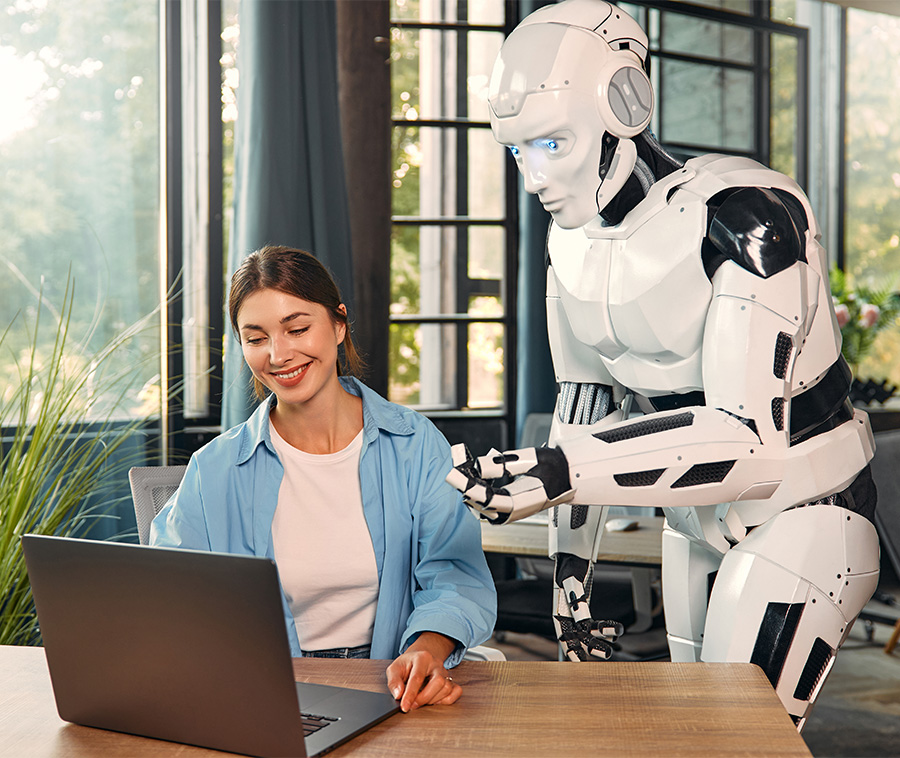
Artificial Intelligence is transforming the hiring landscape by automating repetitive processes and improving decision-making. Among these innovations, AI interview bots have emerged as valuable tools that simplify candidate assessment, reduce bias, and enhance recruitment efficiency. If you’re planning to Build an AI Interview Bot, this comprehensive guide will walk you through each step — from understanding its core concept to developing a fully functional solution.
Build An AI Interview Bot
Why businesses should build?
Time efficiency
Automates initial screening and saves hours of manual work.
Objective evaluation
Reduces human bias and ensures fair assessment.
Scalability
Can handle thousands of applicants simultaneously.

Improved candidate experience
Offers quick feedback and personalized communication.
Data-driven insights
Provides analytics that enhance hiring strategies.

Steps
Define your purpose & use case
Start by identifying your primary goal. Are you designing the bot to screen candidates, assess communication skills, or conduct technical interviews? Defining a clear objective ensures that the AI’s responses and evaluation parameters align with your organization’s needs.
Gather & structure relevant data
Collect interview transcripts, job descriptions, and evaluation criteria to train your model. Ensure your dataset includes diverse examples to help the AI recognize various accents, expressions, and response patterns.
Choose right technology stack
-
Programming Languages: Python or JavaScript
-
AI Frameworks: TensorFlow, PyTorch, or OpenAI API
-
NLP Tools: spaCy, NLTK, or Dialogflow
-
Speech Recognition: Google Speech-to-Text or Amazon Transcribe

Design an flow
A well-structured conversation flow helps the bot communicate naturally. Map out question patterns, responses, and follow-up prompts to maintain human-like interaction. Avoid robotic phrasing — the smoother the dialogue, the better the candidate experience.

Test the AI model
Feed your collected data into the AI model to train it on recognizing intent, tone, and relevant answers. After training, perform multiple testing rounds to fine-tune the bot’s responses and eliminate inaccuracies. Consistent evaluation ensures a refined and trustworthy output.
Integrate the bot with recruitment platforms
Once trained, integrate your AI interview bot with existing HR tools such as applicant tracking systems (ATS) or video conferencing software. Integration streamlines the workflow and centralizes all candidate data for better analysis.
Monitor, analyze, & improve
After deployment, continuously track performance metrics like accuracy rate, candidate satisfaction, and completion time. Regular updates and retraining based on real interview feedback will keep your bot effective and relevant.

Conclusion
Building an AI interview bot involves combining intelligent design, machine learning, and ethical recruitment principles. By following a structured process — from defining objectives to continuous improvement — your organization can automate interviews effectively while maintaining fairness and engagement.