
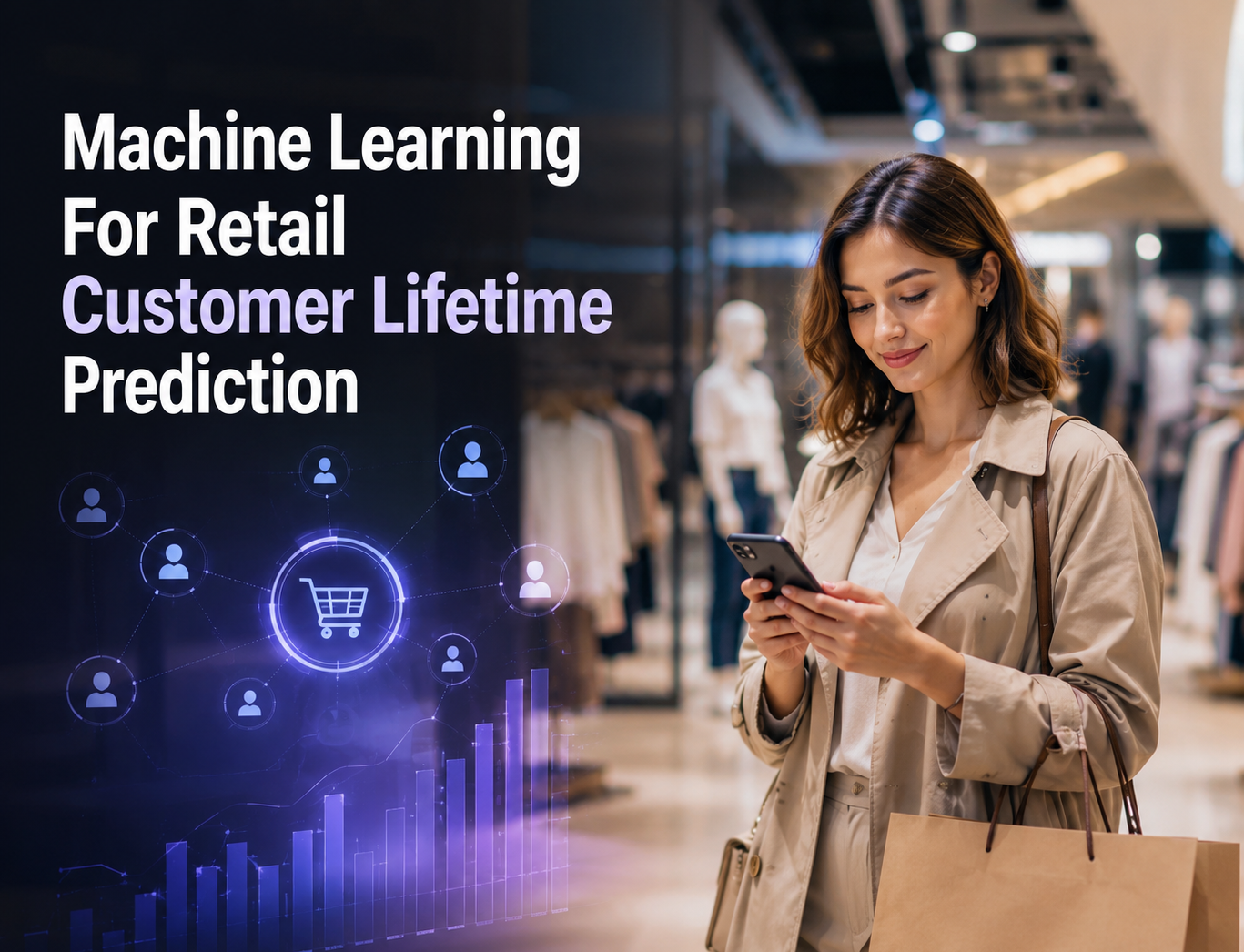
Retail has become increasingly data driven as shoppers interact with brands through physical stores, e-commerce websites, mobile applications, loyalty programs, social channels, and digital campaigns. Retailers need reliable methods to interpret customer behavior and estimate what may happen next. Retail Customer Lifetime Prediction applies machine learning to historical transactions and behavioral signals to estimate the future value of individual shoppers. This approach gives businesses a more forward-looking understanding of customer relationships and can support decisions involving retention, personalization, marketing investment, product recommendations, and revenue planning. For an AI development company, customer lifetime intelligence also provides an opportunity to create tailored predictive platforms that connect data with practical retail operations.
Machine Learning for Retail Customer
How AI Improves Retail Sales Forecasting?
AI analyzes historical sales records alongside current business information to create more responsive predictions. Machine learning models can examine product performance, customer purchasing behavior, pricing changes, promotional campaigns, seasonal activity, store results, and external market factors. These models identify relationships between different variables and estimate their potential effect on upcoming sales. As retailers collect new information, they can retrain and refine their models to keep forecasts relevant and useful.

Accurate Sales Forecasting Matters
Sales forecasts influence purchasing, inventory management, workforce planning, marketing, budgeting, and supply chain activities. When retailers underestimate demand, they may face stock shortages, missed sales opportunities, and insufficient staffing. When they overestimate demand, they may purchase excess merchandise, increase storage costs, and tie up working capital. Accurate forecasting helps retailers maintain a better balance between customer demand and available resources. AI strengthens this process by examining large datasets, recognizing important trends, and helping businesses anticipate potential changes before they affect daily operations.

Analyzing Historical Sales Data
Historical sales data gives retailers an important foundation for forecasting future performance. AI can examine transaction records, product-level results, regional sales, seasonal fluctuations, and changes in purchase volume to identify recurring patterns. Instead of simply calculating averages, machine learning can distinguish normal variations from unusual events. Retailers can then determine which historical trends provide useful guidance and which results came from temporary circumstances such as one-time promotions or unexpected market changes.
Customer Purchasing Behavior
Customer behavior often provides valuable clues about future sales. AI can examine purchase frequency, product preferences, order values, repeat purchases, browsing activity, and category interests to identify changing habits. When customers begin showing greater interest in a particular product or category, intelligent models can recognize the shift and incorporate it into future projections. Retailers can use these insights to adjust product availability, marketing campaigns, and merchandising decisions before a new trend becomes fully established.
Evaluating Promotional Impact
Discounts, loyalty offers, advertising campaigns, and special events can influence sales considerably. However, each promotion may produce different results depending on the product, audience, timing, pricing strategy, and competitive environment. AI evaluates previous campaign results and identifies the factors that contributed to stronger or weaker performance. Retailers can use these insights to estimate the likely impact of future promotions and make better decisions about campaign timing, merchandise availability, and marketing expenditure.
Forecasting Store-Level Performance
Retail chains often operate stores with different customer profiles, locations, sizes, and sales patterns. A large outlet in a commercial area may attract a different audience from a smaller neighborhood branch. AI can examine sales information for each location and identify specific performance trends. Retail managers can use these insights to estimate future revenue, allocate merchandise, plan staffing, and establish realistic targets for individual stores.
Detecting Changes in Sales Performance
AI can identify unusual changes in sales activity and alert retailers when performance moves away from expected patterns. A sudden increase may indicate a successful campaign, emerging product trend, competitor shortage, or change in customer preference. A decline may point to pricing issues, limited availability, weaker demand, or stronger competition. By detecting these changes early, retailers can investigate the underlying causes and respond before a temporary issue develops into a larger business problem.
Inventory Decisions

Real-Time Data for Better Forecasts
Retail conditions can change quickly, so businesses need timely information to maintain accurate forecasts. Point-of-sale systems, e-commerce platforms, inventory applications, customer interactions, and marketing tools can provide real-time signals about business activity. AI can process these signals and update predictions as new information arrives. This capability helps retailers recognize emerging opportunities, identify potential risks, and adjust their plans before significant changes affect performance.