
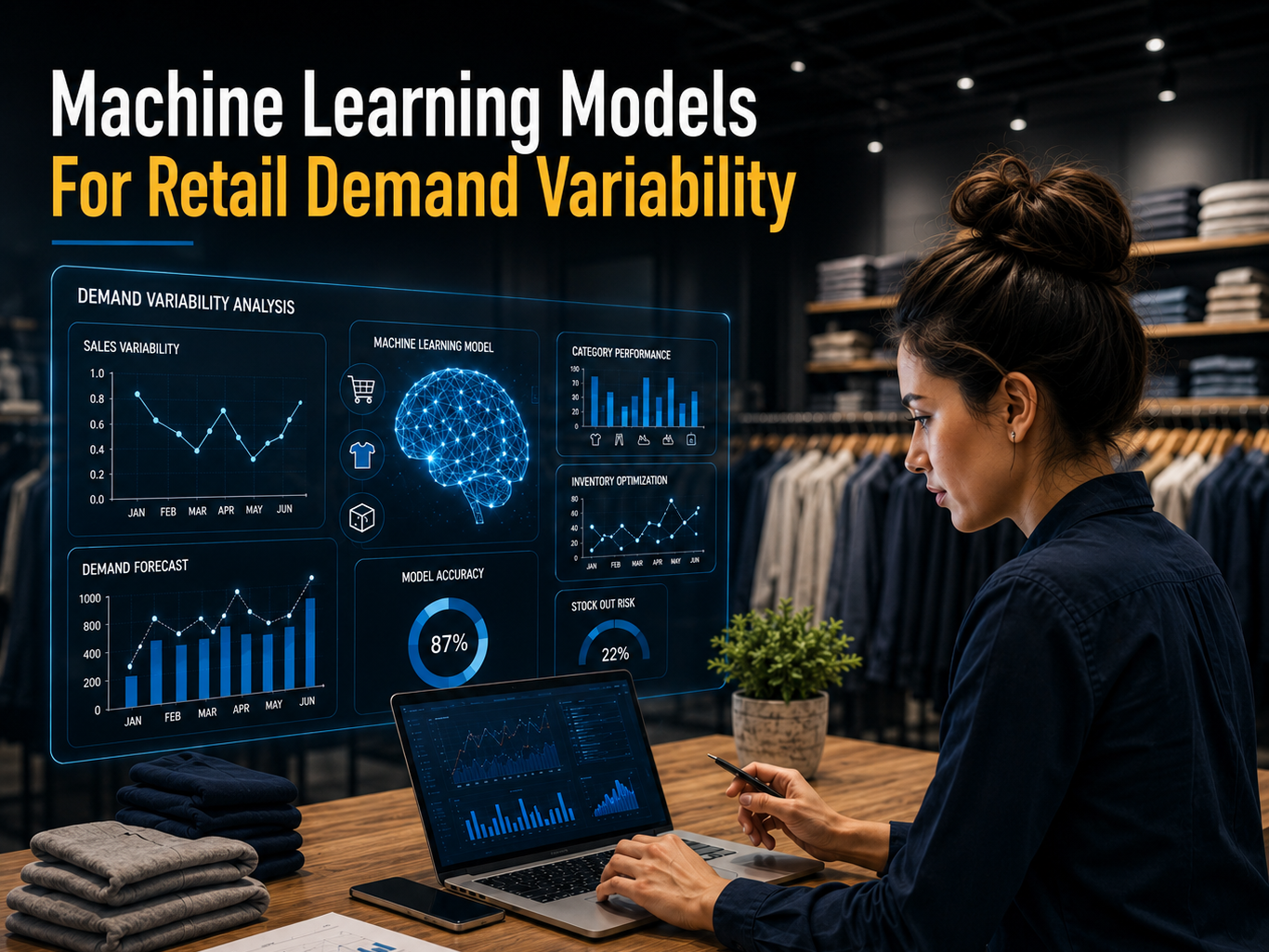
Retail demand can change quickly as customers respond to seasonal events, price adjustments, promotions, competitor activity, economic conditions, and changing preferences. These fluctuations create challenges for businesses that need to maintain product availability while controlling inventory costs. Machine learning gives retailers a stronger way to examine large datasets, identify hidden relationships, and understand changing demand patterns. By using Retail Demand Variability analysis, businesses can improve inventory decisions, strengthen purchasing plans, manage replenishment, and respond more effectively to shifts in customer demand.
Retail Demand Variability
How Retail Demand Changes?
Selecting Models for Demand Analysis
Different retail products can follow very different demand patterns, so one machine learning model may not suit every situation. Time series techniques can analyze changes across periods, regression models can examine relationships between demand and external factors, clustering can group products with similar behavior, and advanced neural networks can handle complex relationships across large datasets. Retailers can select models according to product characteristics, data availability, forecasting requirements, and business objectives. Choosing an appropriate approach can improve the quality of demand insights.
Analyzing Demand Patterns
Seasonal changes can create predictable fluctuations across many retail categories. Machine learning can examine historical sales cycles and compare them with current activity to determine whether demand follows an expected seasonal pattern. Retailers can use this information to prepare inventory, purchasing, staffing, and promotional plans before seasonal demand reaches its peak.
Identifying Hidden Sales Patterns
Large retail datasets often contain relationships that manual analysis may overlook. Machine learning can examine transaction history, product movement, customer activity, pricing information, and promotional results to identify connections between different variables. These patterns can reveal products that experience similar demand changes or categories that respond to particular market conditions. Retailers can use these findings to improve assortment planning and make more informed decisions about future demand.
Improving Inventory Planning
Inventory planning depends heavily on the quality of demand information. Machine learning can combine projected demand with current stock, incoming shipments, supplier lead times, and product movement to provide a broader view of inventory requirements. Retailers can use these insights to maintain suitable stock levels and reduce the risk of both shortages and excess merchandise. Better alignment between demand signals and inventory decisions can also improve working capital management.
Adapting Replenishment Strategies
Replenishment strategies need to respond when customer interest changes. Machine learning can detect these changes and help retailers adjust replenishment requirements. Connecting forecasting insights with purchasing systems can help teams respond faster and avoid relying solely on fixed reorder patterns.
Analyzing Price-Driven Demand Changes
Machine learning can analyze historical transactions to understand how customers respond to different price levels, discounts, and promotional offers. Retailers can use these insights to evaluate potential demand changes before adjusting prices. Understanding price sensitivity can help businesses balance sales opportunities with margin protection.
Integrating Machine Learning into Operations
Machine learning creates greater value when retailers connect forecasting insights with everyday business processes. Purchasing teams can use demand signals to adjust orders, inventory managers can review stock requirements, and merchandising teams can respond to changing product interest. Marketing teams can also use demand information when planning campaigns. Connecting analytical insights with operational decisions allows retailers to turn predictions into practical actions.
Conclusion
Machine learning gives retailers a practical way to understand complex demand fluctuations and make stronger operational decisions. These insights can help retailers improve inventory planning, replenishment, purchasing, supplier coordination, and merchandising strategies. An experienced ai development company can help businesses develop customized machine learning solutions that connect demand intelligence with existing retail operations. By combining reliable data, suitable models, continuous monitoring, and human expertise, retailers can respond to changing demand with greater confidence, reduce operational risks, and support sustainable growth.