
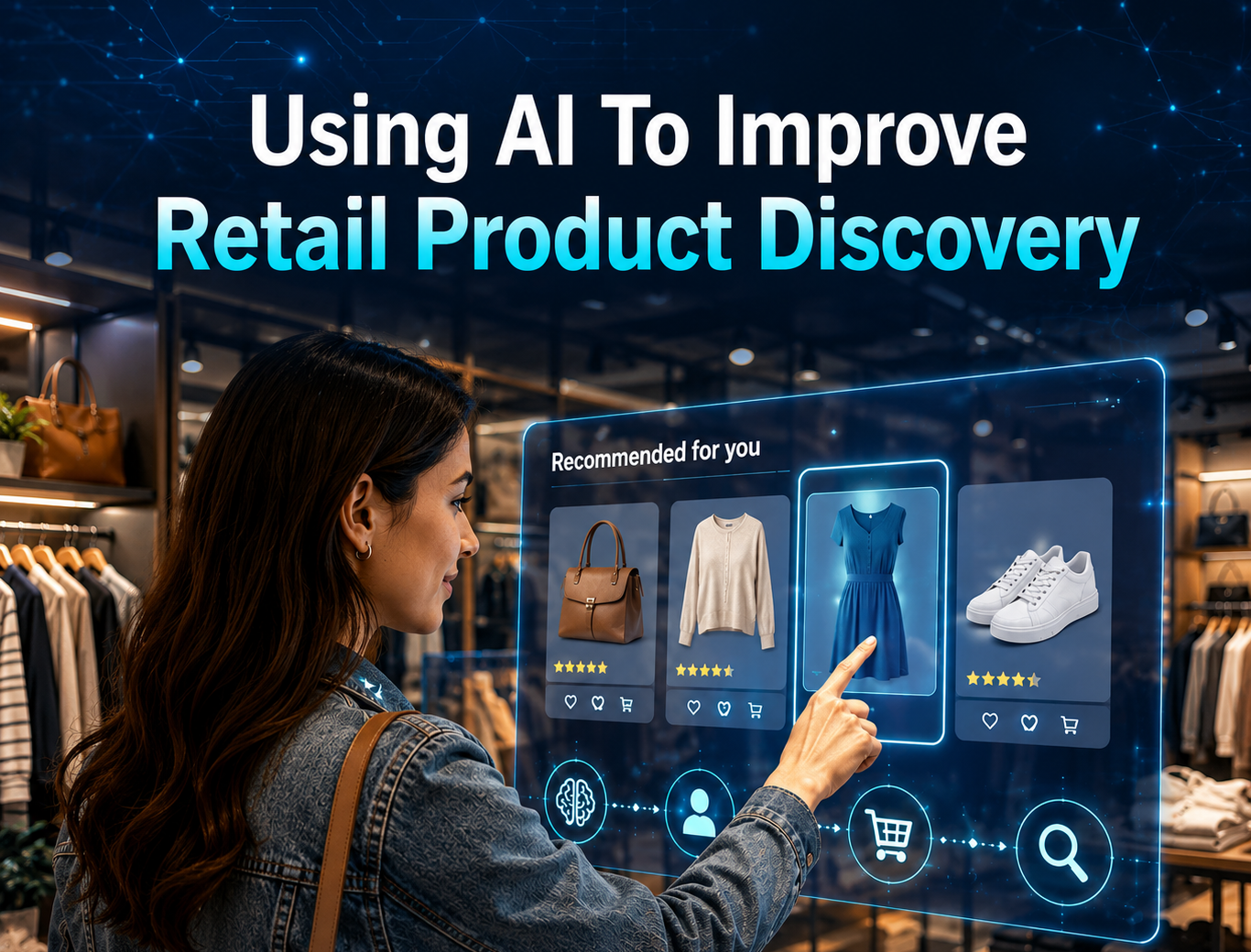
Online shoppers rarely arrive with a perfectly structured request. They may know the problem they want to solve, the style they prefer, or the occasion they are preparing for, yet they often lack the precise catalogue language needed to locate a suitable item. A retailer can offer an impressive assortment and still create frustration if visitors must guess the right keywords, open endless category pages, or compare products without useful guidance. Retail Product Discovery addresses this challenge by connecting customer intent with relevant merchandise through search, navigation, recommendations, filters, and clear product information. Artificial intelligence strengthens that journey by interpreting meaning, learning from context, and helping each visitor move from an initial idea to a confident decision.
Retail Product Discovery
Smarter Search Experiences
Semantic Search
Semantic search can interpret natural language and connect a request with catalogue attributes that a shopper never typed explicitly. It can distinguish between a formal shoe and a walking shoe, understand that “small work bag” may imply laptop compatibility, and recognise that “quiet blender” relates to sound performance rather than appearance. To make this capability reliable, retailers need accurate fields for materials, dimensions, fit, compatibility, colour, capacity, care, and use case. Strong metadata gives the model dependable evidence and helps merchandising teams explain why a result deserves attention.
Conversational Guidance
A shopping assistant can clarify an uncertain request through brief, relevant questions. Someone searching for a family laptop might need to consider budget, portability, screen size, software, battery life, and warranty coverage. Rather than displaying a long list, the assistant can narrow the range and present a concise comparison. Trust requires clear boundaries: the interface should separate verified product facts from generated suggestions, cite available specifications within the experience, acknowledge missing information, and provide access to a human adviser when a purchase involves unusual requirements or significant expense.
Visual Discovery And Image Search
Some shoppers can recognise the look they want more easily than they can describe it. Image search allows them to upload a photograph, select an object within a picture, or explore visually similar products. Computer vision can compare shape, pattern, colour, texture, and design while the commerce platform checks price, availability, delivery options, and relevant attributes. Performance improves when teams provide consistent photography, multiple viewing angles, accurate image labels, and testing across varied lighting, backgrounds, skin tones, and accessibility needs. Visual similarity should guide exploration without making unsupported claims about quality or suitability.

Recommendations Technologies
Recommendation technology can combine current browsing activity with saved items, past purchases, product similarity, stock position, seasonality, and stated preferences. A first-time visitor might receive suggestions based on the page currently open, while a returning customer may see options connected to previous interests. Context matters greatly. A replenishment reminder, a gift idea, and a premium upgrade should not follow the same logic. Good personalisation also preserves choice: retailers should provide understandable reasons for suggestions, offer preference controls, introduce useful variety, and make it easy to reset the experience.
Better Product Content
AI can help editorial teams improve titles, descriptions, comparison tables, specifications, translations, and accessibility text. It can flag missing fields, identify contradictory measurements, group related attributes, and adapt explanations for different audiences. Human review remains essential. A fluent description that invents a material, certification, performance claim, or compatibility detail can damage trust and create legal or operational problems. Retailers should ground generated language in approved source data, validate high-impact claims, and retain a clear approval record before publication.

Intelligent Filters And Navigation
AI can estimate which refinements matter most for a particular query and place them in a logical order. Running-shoe shoppers may value terrain, cushioning, stability, width, and drop, while formalwear visitors may prioritize colour, length, fabric, occasion, and care. Dynamic navigation can reduce cognitive effort by hiding irrelevant attributes and highlighting useful ones. The experience still needs familiar labels and consistent values; automation cannot repair a confusing taxonomy or incomplete catalogue on its own.
Building A Reliable AI Programme
Measurable customer problem rather than launching a broad technology project. Useful starting points include poor results for natural-language searches, frequent zero-result queries, high exits from category pages, weak recommendation engagement, or excessive support requests about product selection. Testing should combine offline evaluation with controlled experiments. AI model that improves the overall average may still disadvantage a valuable segment or repeatedly promote products with high return rates. Merchandisers, service colleagues, data specialists, designers, and governance partners should review failures together because dashboards rarely capture every form of confusion.

Mistakes That Reduce Impact
Several shortcuts can weaken an otherwise promising programme. Launching a chatbot before repairing product data simply gives customers a smoother route to unreliable answers. Optimising for clicks can reward curiosity while ignoring fit, satisfaction, returns, and profitability. Over-personalising every page can create a narrow experience that prevents useful exploration. Treating generated text as automatically accurate can introduce claims no source supports. Applying one model across every department can also fail because beauty, electronics, grocery, apparel, and home goods involve different language, attributes, and decision patterns.
Conclusion
AI can transform Retail Product Discovery when retailers combine intelligent interpretation with reliable information, thoughtful design, responsible governance, and disciplined measurement. The strongest results come from solving a defined customer problem, improving catalogue quality, testing one use case, and scaling only after evidence shows better relevance and healthier business outcomes. When technology understands intent, explains trade-offs, respects customer choice, and reflects real availability, it creates a simpler path from need to purchase and builds a more helpful relationship between retailer and shopper.