
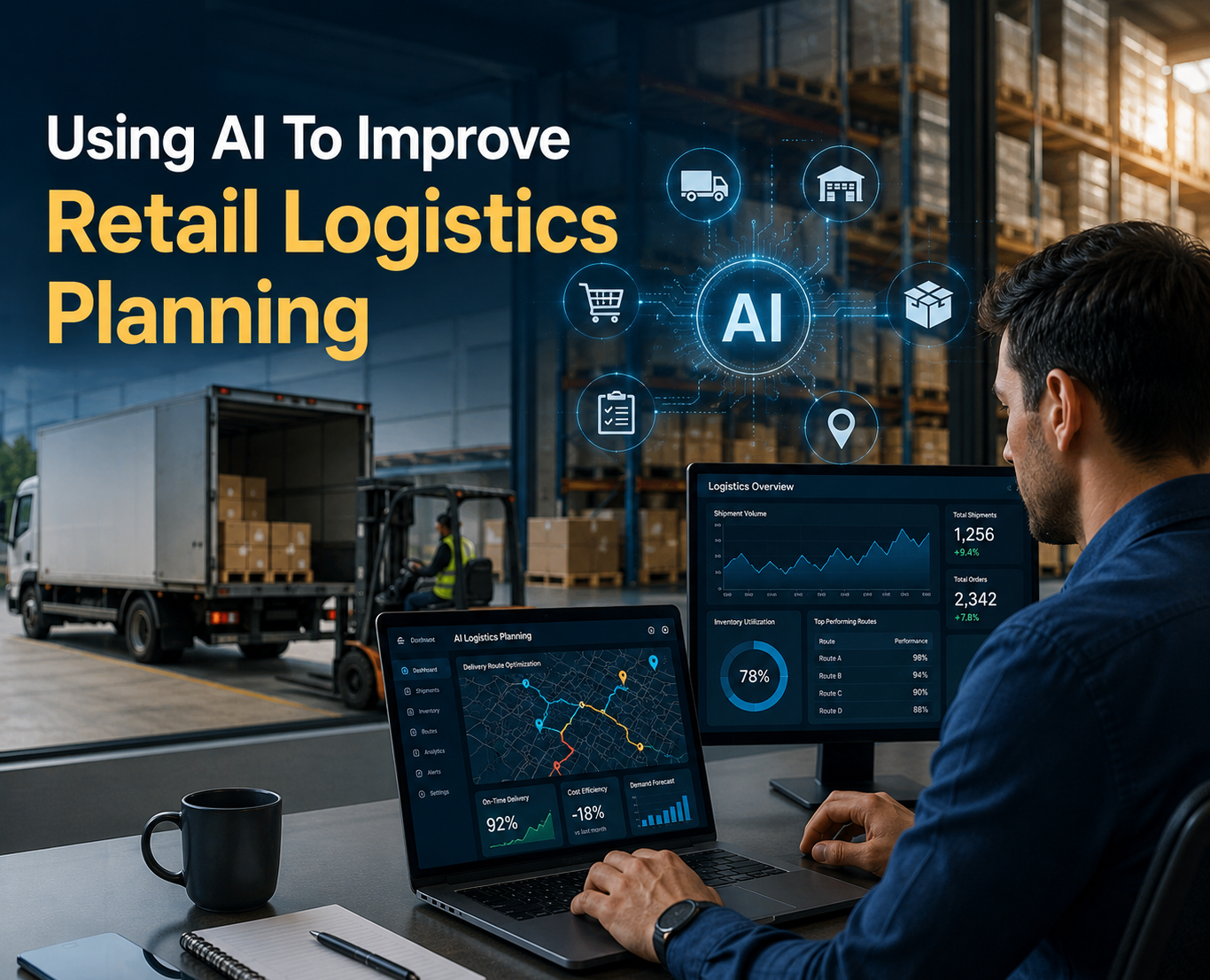
Retail logistics has become more complex as customers expect quick delivery, accurate order updates, and dependable product availability. Behind every successful purchase is a network of suppliers, warehouses, transport providers, inventory systems, and fulfillment teams that must work together. When demand changes suddenly or a shipment is delayed, a small issue can quickly affect several parts of the operation. AI Retail Logistics Planning gives retailers a practical way to study large amounts of operational information, identify patterns, and support faster decisions. Rather than replacing experienced logistics professionals, artificial intelligence can provide useful forecasts and recommendations that help teams plan with greater confidence.
Retail Logistics Planning
How Is AI Changing Retail Logistics?
Traditional logistics planning often depends on historical reports, spreadsheets, fixed schedules, and the experience of individual planners. These methods remain useful, but they can become difficult to manage when a retailer handles thousands of products and orders across multiple locations. AI can analyze sales activity, inventory levels, supplier records, transportation information, warehouse workloads, and other signals at a much larger scale. The resulting insights can help teams anticipate demand, recognize potential bottlenecks, compare planning options, and adjust decisions as conditions change. This makes logistics more responsive instead of relying entirely on plans created earlier.
AI For Demand Forecasting
Accurate demand forecasting is a foundation of effective retail logistics. Retailers need to estimate how much customers may purchase across products, regions, stores, and time periods. AI models can examine historical sales along with seasonal patterns, promotions, holidays, product launches, pricing changes, and other relevant factors. By identifying relationships within this information, models can produce forecasts that help planners prepare for upcoming demand. Better estimates can support purchasing, warehouse capacity, inventory positioning, and transportation planning. Forecasts should still be reviewed because unusual events can cause demand to behave differently from historical patterns.
Improving Inventory Allocation
Having sufficient inventory is only part of the challenge. Retailers must also decide where that stock should be positioned. A product may be available in one warehouse while another location is close to running out. AI can compare regional demand, current stock, replenishment times, order activity, and transportation constraints to suggest more suitable inventory placement. Moving products closer to expected demand can reduce fulfillment delays and unnecessary transfers. It can also improve the chances that customers receive products from a nearby location, which may support faster and more economical delivery.
Smarter Warehouse Operations
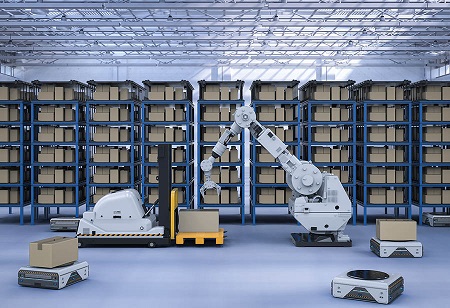
Warehouses manage receiving, put-away, storage, picking, packing, and dispatch, making them important points for logistics optimization. AI can examine order patterns and warehouse activity to identify opportunities for better product placement and task scheduling. Frequently ordered products may be positioned closer to packing areas, while predicted order volumes can help managers prepare staffing and equipment. Intelligent planning can also identify periods when workload is likely to increase. These insights can help warehouses use available space and labor more effectively without depending solely on physical expansion.
Reducing Stockouts And Overstock
Retailers face a constant balance between having enough products available and avoiding unnecessary inventory. Stockouts can cause lost sales and customer dissatisfaction, while overstock ties up capital and consumes valuable storage space. AI can compare expected demand with current inventory, incoming shipments, lead times, and sales trends to identify possible imbalances. Planners can then consider replenishment, transfers, promotions, or other actions before the situation becomes more difficult. This creates a more controlled approach to inventory management.
Supplier And Procurement Planning
Retail logistics begins well before an order reaches a warehouse. Supplier reliability, production schedules, lead times, and purchasing decisions all influence product availability. AI can examine supplier history to identify patterns in delivery performance, quantity variation, and lead-time changes. These insights can help procurement teams decide when to reorder products and where additional safety stock may be useful. For products with long replenishment cycles, early visibility can make a significant difference because there may be limited time to respond after a delay becomes visible.
Using Real-Time Logistics Data
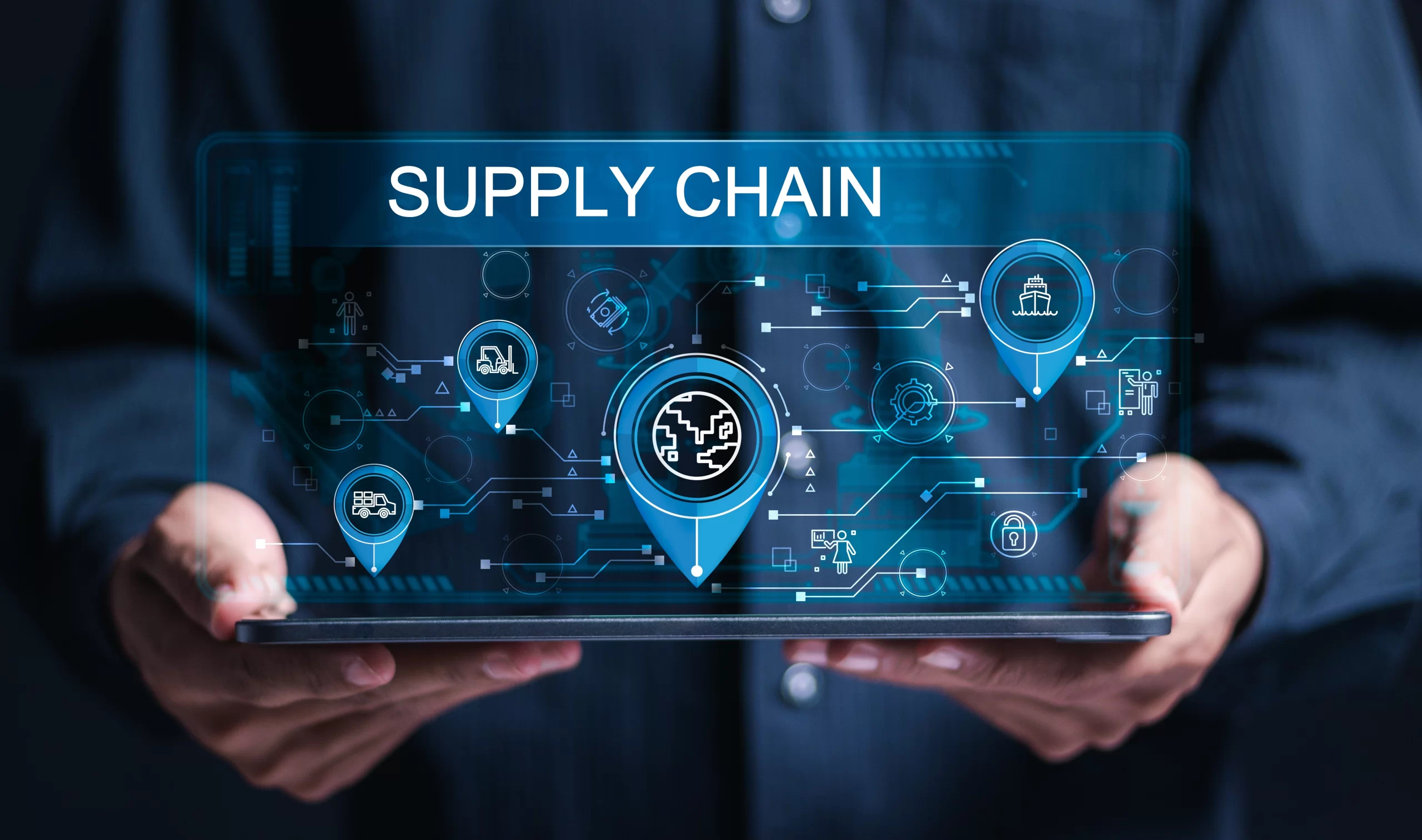
Retail logistics does not remain static throughout the day. New orders arrive, vehicles move, warehouse workloads change, and unexpected events can affect transportation. Real-time data allows AI systems to consider current conditions instead of relying only on earlier forecasts. A planning platform can combine live operational information with predictive insights to show where action may be required. This can help logistics managers react more quickly when a route becomes unavailable, demand rises unexpectedly, or a fulfillment center begins to experience congestion.
AI And Last-Mile Delivery
Last-mile delivery is often one of the most challenging stages of the retail supply chain because individual orders may be spread across many locations. AI can analyze delivery density, customer addresses, vehicle capacity, time windows, and route conditions to recommend efficient delivery sequences. Nearby orders may be grouped where appropriate, while routes can be adjusted when traffic or capacity changes. Better planning can reduce unnecessary mileage and support more consistent arrival times. This is especially valuable for retailers offering same-day or next-day delivery.
Data Quality And System Integration
AI planning depends heavily on accurate and timely information. Incorrect inventory counts, missing orders, delayed shipment updates, or inconsistent supplier records can reduce the quality of recommendations. Retailers should establish reliable data flows between order management, warehouse systems, inventory platforms, procurement tools, and transportation applications. A connected data environment gives AI a more complete view of operations. Data quality should also be monitored continuously because even a strong model can produce weak results when its inputs are incomplete or outdated.
Measuring AI Logistics Performance
Retailers should measure business outcomes rather than judging an AI project only by technical model accuracy. Useful indicators include forecast error, stockout frequency, inventory turnover, transportation spending, warehouse productivity, delivery reliability, and order fulfillment time. Comparing these measures before and after implementation can show whether the system is creating practical value. Teams should also monitor false alerts and recommendations that require frequent manual correction. Regular performance reviews make it easier to identify where the model, data, or workflow needs improvement.
Conclusion
AI Retail Logistics Planning gives retailers a practical way to improve decisions across demand forecasting, inventory, warehousing, transportation, and delivery. By processing large volumes of operational information, AI can reveal patterns, highlight risks, and recommend actions that may be difficult to identify manually. The strongest results come from reliable data, connected systems, clear performance measures, and experienced people who can review recommendations. When introduced thoughtfully, AI can help retailers reduce waste, improve delivery reliability, respond to disruptions, and build a logistics network that is better prepared for changing customer demand.