
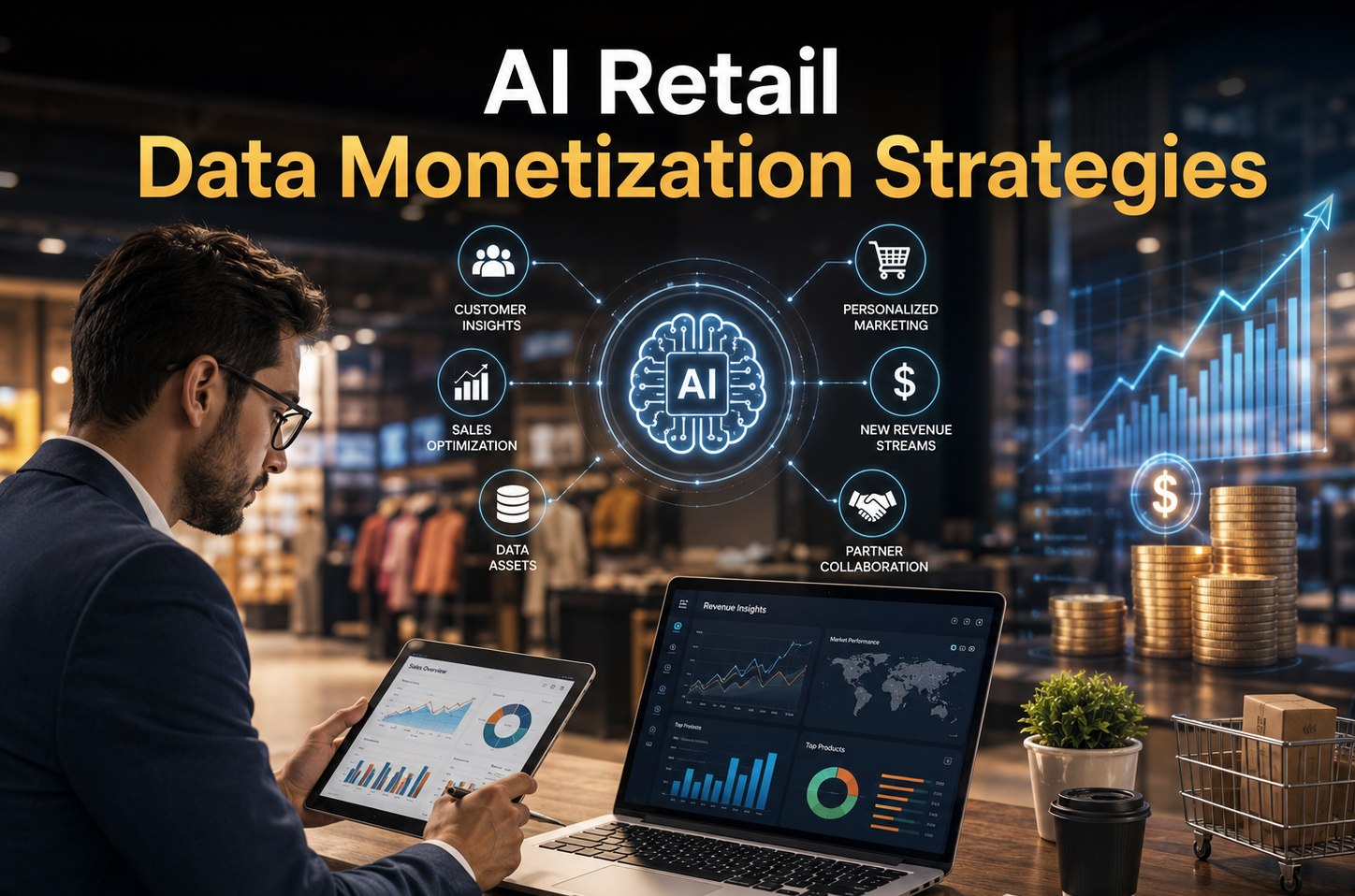
Retailers collect information through purchases, browsing activity, loyalty programs, inventory systems, supplier interactions, advertising channels, and customer service. Businesses can use these signals for reporting, yet they can also create broader commercial value when handled responsibly. Artificial intelligence can identify patterns, forecast outcomes, organize complex information, and turn large datasets into practical insights. Retail Data Monetization Strategies can therefore support new revenue opportunities, stronger partner services, better commercial planning, and improved internal decisions. Successful monetization does not mean simply selling customer information.
Retail Data Monetization Strategies
Why Are Retailers Exploring Data Monetization?
First-Party Data As A Strategic Asset
Retailers often maintain rich first-party information generated through direct customer and operational interactions. The value of this information depends on accuracy, permission, context, and relevance rather than volume alone. Retailers should establish clear ownership and purpose for important datasets before considering monetization. A strong foundation allows teams to create useful analytical products without losing sight of privacy obligations or customer expectations.
AI Market Intelligence
AI can transform transaction and behavioral signals into market intelligence that helps approved partners understand changing demand. Models can identify category momentum, regional differences, seasonal shifts, product relationships, and emerging patterns. Retailers can package these findings into dashboards, reports, alerts, or subscription services. A focused insight product can provide more value than a generic data feed because it connects information with a decision.

Supplier And Brand Analytics Services
Retailers can create paid analytics services that provide approved partners with useful performance intelligence. AI can enhance these offerings by highlighting unusual movement, forecasting demand, identifying assortment gaps, and explaining promotion outcomes. The retailer can package insights according to partner needs rather than exposing broad internal datasets. Subscription tiers, premium dashboards, customized reports, and managed analytics services can provide several monetization models while keeping access controlled.
Retail Media And Advertising Intelligence
Retail media gives businesses an opportunity to use shopping signals to help brands reach relevant audiences. AI can improve audience selection, campaign measurement, product recommendations, and performance analysis. Instead of providing advertisers with raw customer information, retailers can create privacy-conscious audience segments and use controlled platforms to deliver relevant promotions. A well-designed retail media environment turns proprietary shopping signals into advertising intelligence while keeping customer information within governed systems. Clear policies and transparent practices remain essential.

Pricing And Promotion Intelligence
Retailers can use AI to study how shoppers respond to different prices, offers, bundles, and promotional periods. These insights can support internal planning and, where appropriate, become part of commercial analytics services for suppliers. Models can examine demand changes, product substitution, basket behavior, and promotion effectiveness. Rather than simply showing that sales increased during an offer, an analytical service can help identify whether the campaign generated incremental demand or shifted purchases from another product.

Product And Category Intelligence
Retailers can create analytical products that show how categories evolve over time. Suppliers can use these insights for assortment planning, product development, packaging decisions, and launch timing. The retailer can combine several signals to create a more complete market view than a single sales report provides. Product intelligence becomes especially valuable when delivered through easy-to-use dashboards with alerts, comparisons, and concise explanations that help partners act quickly.
APIs And Embedded Analytics
Some partners may prefer analytical results directly inside their own applications or workflows. Secure APIs can deliver approved metrics, forecasts, classifications, or recommendations without transferring large raw datasets. Embedded analytics can place retail intelligence inside supplier portals, planning tools, or business applications. AI can generate outputs dynamically while governance controls determine what each partner can access. API-based monetization can scale efficiently, but retailers need strong authentication, rate limits, monitoring, versioning, and documentation to keep the service dependable.

Internal Data Monetization
Retailers can generate substantial economic value by using information to improve internal decisions. AI can also reduce manual analytical work by automating repetitive investigation and surfacing important changes. These gains represent indirect monetization because the business converts information into measurable financial improvement. Internal value creation can also provide a useful testing ground before a retailer introduces external data products.
Privacy, Consent, And Responsible Use
Retail data monetization requires careful attention to privacy and responsible information use. Businesses should understand applicable requirements, document legitimate purposes, control access, and avoid exposing identifiable information unnecessarily. Even when a technical process appears possible, it may not align with what people reasonably expect from a retailer. Privacy-preserving design should therefore begin during product planning rather than after development. Legal, security, governance, and commercial teams should work together to define acceptable uses and review new monetization ideas before launch.
Security And Access Controls
Commercial data products can become attractive targets for unauthorized access, making strong security essential. Retailers should apply role-based permissions, encryption, authentication, monitoring, and appropriate network controls. API activity, downloads, queries, and unusual behavior should be monitored so potential misuse can be investigated quickly. Security requirements should also extend to vendors and partners that receive analytical services.

Measuring Monetization Performance
Retailers need clear measures to determine whether a data monetization program creates value. Internal benefits can be measured through improvements in forecast accuracy, inventory efficiency, marketing performance, conversion, or operational productivity. Teams should also monitor data quality incidents, privacy events, and customer feedback. A balanced scorecard prevents the program from focusing only on revenue while ignoring trust, quality, and long-term sustainability.
Conclusion
Retail Data Monetization Strategies work best when businesses combine high-quality information with clear commercial use cases, responsible privacy practices, strong security, and measurable outcomes. Retailers should identify information that can solve meaningful problems and package it in ways that customers, partners, and internal teams can trust. With the right foundation, AI can make retail information more useful, scalable, and commercially valuable.