
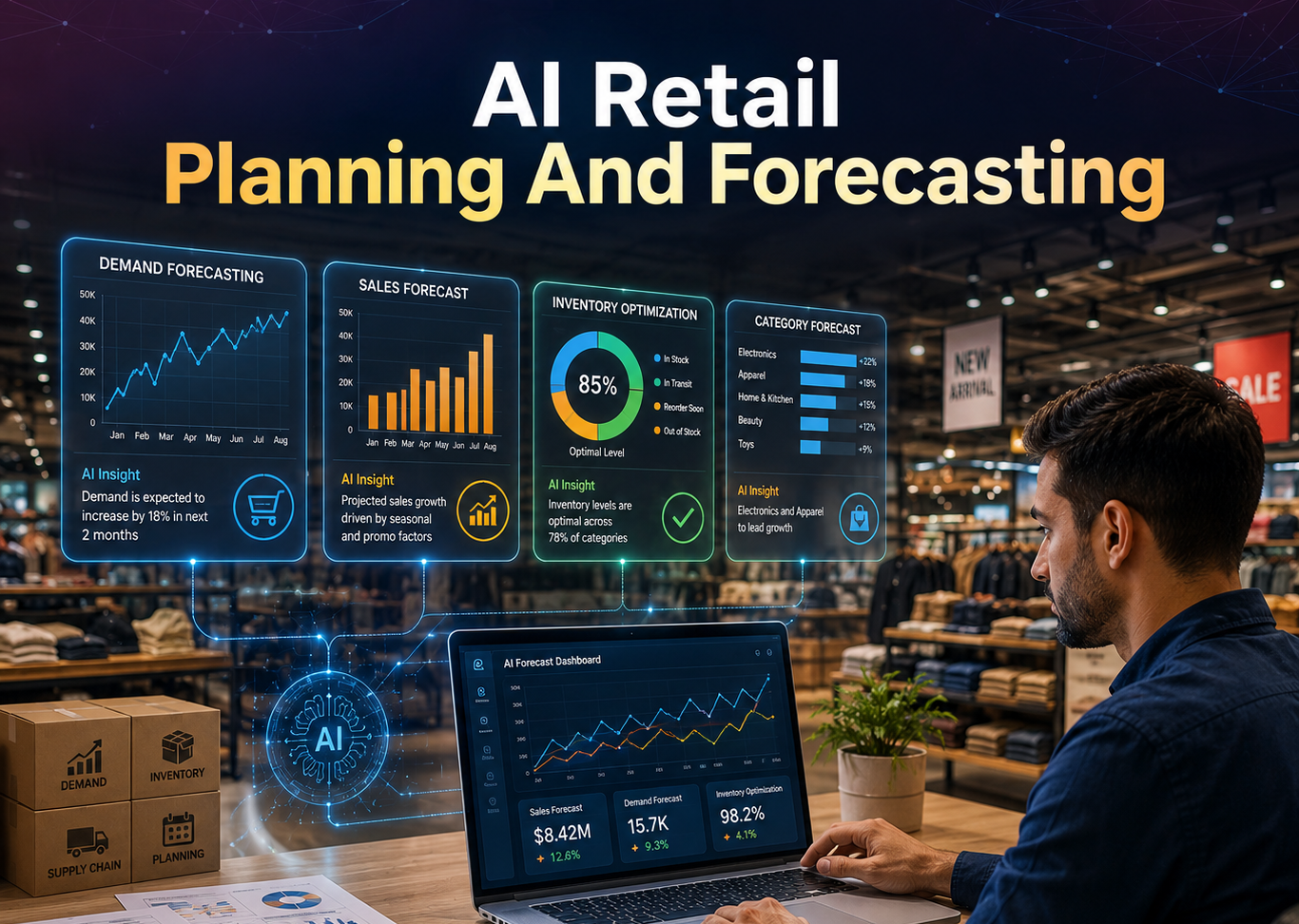
Retailers make hundreds of decisions every day about inventory, budgets, promotions, assortment, staffing, purchasing, and store performance. Each choice depends on an accurate understanding of what customers may want next. Traditional planning methods can struggle when demand changes quickly, product ranges expand, and sales channels become more connected. Artificial intelligence can strengthen Retail Planning and Forecasting by examining large volumes of historical and real-time information, identifying demand patterns, estimating future conditions, and helping teams respond with greater confidence. The strongest approach combines machine intelligence with commercial experience so retailers can prepare for change without relying entirely on guesswork.
Retail Planning And Forecasting
How Does AI Improve Retail Planning?
AI can make planning more responsive by combining information from sales, inventory, customer behavior, promotions, pricing, supply conditions, and external factors. Machine learning models can identify relationships that traditional rules may overlook. Predictive systems can estimate demand at product, store, region, channel, and time levels. Optimization engines can then evaluate possible decisions and recommend suitable actions. This creates a more connected planning process in which teams can compare scenarios instead of reviewing isolated reports.
Inventory Planning & Replenishment
AI can estimate future requirements and help determine when products should be replenished, how much stock should move, and where inventory should sit. Models can consider lead times, service targets, supplier reliability, safety stock, demand volatility, and available capacity. This can reduce excess inventory while protecting product availability. Retailers should also account for the difference between theoretical stock and sellable units because damaged, reserved, or unavailable items can distort replenishment decisions if the data model does not reflect operational reality.
AI Demand Forecasting
Demand forecasting is one of the most valuable applications of AI in retail. Advanced systems can identify demand patterns across different time horizons and locations. They can also recognize unusual changes and adjust estimates when new evidence appears. Forecast quality should not be judged only by a single accuracy number. Retailers should consider bias, volatility, business impact, and the cost of forecast errors when selecting and evaluating models.
Pricing And Markdown Planning
Pricing decisions influence demand, margin, inventory turnover, and customer perception. AI can estimate how shoppers may respond to price changes by examining historical transactions, product attributes, competitor signals where appropriate, and promotional behavior. Markdown models can identify products that may require action before they become difficult to sell. Retailers can use predictive insight to determine when a price adjustment may protect value or accelerate sell-through.

Supply Planning & Supplier Coordination
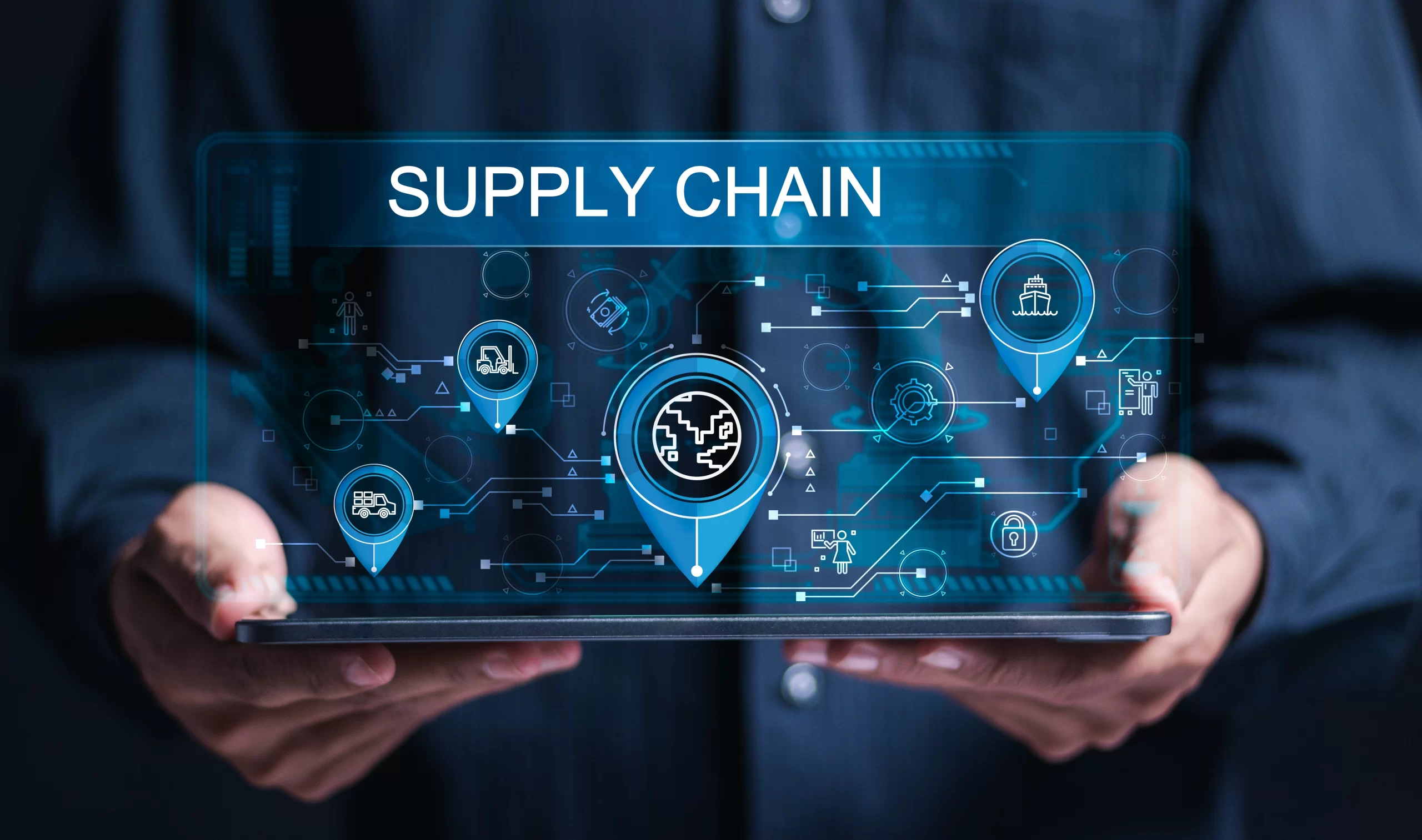
Retail planning depends on the ability of suppliers and logistics partners to support expected demand. Predictive alerts can help buyers act earlier when a product may become unavailable. Scenario analysis can also show the effect of delayed shipments or alternative sourcing decisions. Better coordination reduces the distance between commercial plans and physical availability. Suppliers can receive more useful demand signals when retailers maintain clear definitions and reliable planning processes.
Omnichannel Planning
Customers move between websites, mobile applications, marketplaces, stores, and other channels without thinking about the internal systems behind each interaction. Retailers therefore need planning methods that consider demand across the entire network. AI can help distinguish channel-specific behavior while also identifying relationships between them. Integrated planning creates a more accurate picture of total demand and helps businesses allocate inventory and resources across channels instead of optimizing each route independently.
Real-Time Forecast Adjustments
Retail conditions can change between scheduled planning cycles. A product may suddenly gain attention, a supplier may miss a shipment, or a local event may alter purchasing patterns. AI can process new signals and adjust forecasts when evidence supports a change. Real-time updates should not react to every temporary fluctuation because excessive sensitivity can create unstable plans. A balanced system provides timely insight while maintaining enough stability for teams to execute decisions.

Governance And Responsible AI
AI planning requires clear ownership, access controls, documentation, monitoring, and review procedures. Retailers should know which data supports each model, who can change important parameters, and how recommendations reach business users. Models should undergo periodic validation because product ranges, customer behavior, and supply conditions change. Sensitive information should receive appropriate protection, and teams should avoid using data beyond legitimate business purposes. Responsible AI creates confidence by making analytical systems accountable, explainable, and aligned with established business controls.
Data Quality And Integration
Forecasting quality depends heavily on the information used by the model. Duplicate records, missing transactions, inconsistent product identifiers, delayed updates, and incorrect inventory statuses can weaken predictions. Retailers should connect sales, product, inventory, pricing, promotion, supply, and customer information through governed data pipelines. Clear ownership and validation rules can improve reliability. Teams should also document business definitions so planners understand exactly what each metric represents. A sophisticated algorithm cannot compensate for a weak data foundation, making data quality one of the most important priorities in an AI planning program.

Conclusion
AI can transform Retail Planning And Forecasting by helping retailers understand demand more clearly, respond to changing conditions, optimize inventory, improve assortment choices, strengthen promotion planning, and coordinate supply with commercial objectives. The most successful programs do not rely on algorithms alone. They combine quality information, thoughtful modeling, practical workflows, and experienced planners. Retailers that build this foundation can move from periodic forecasting toward a more responsive planning environment.