
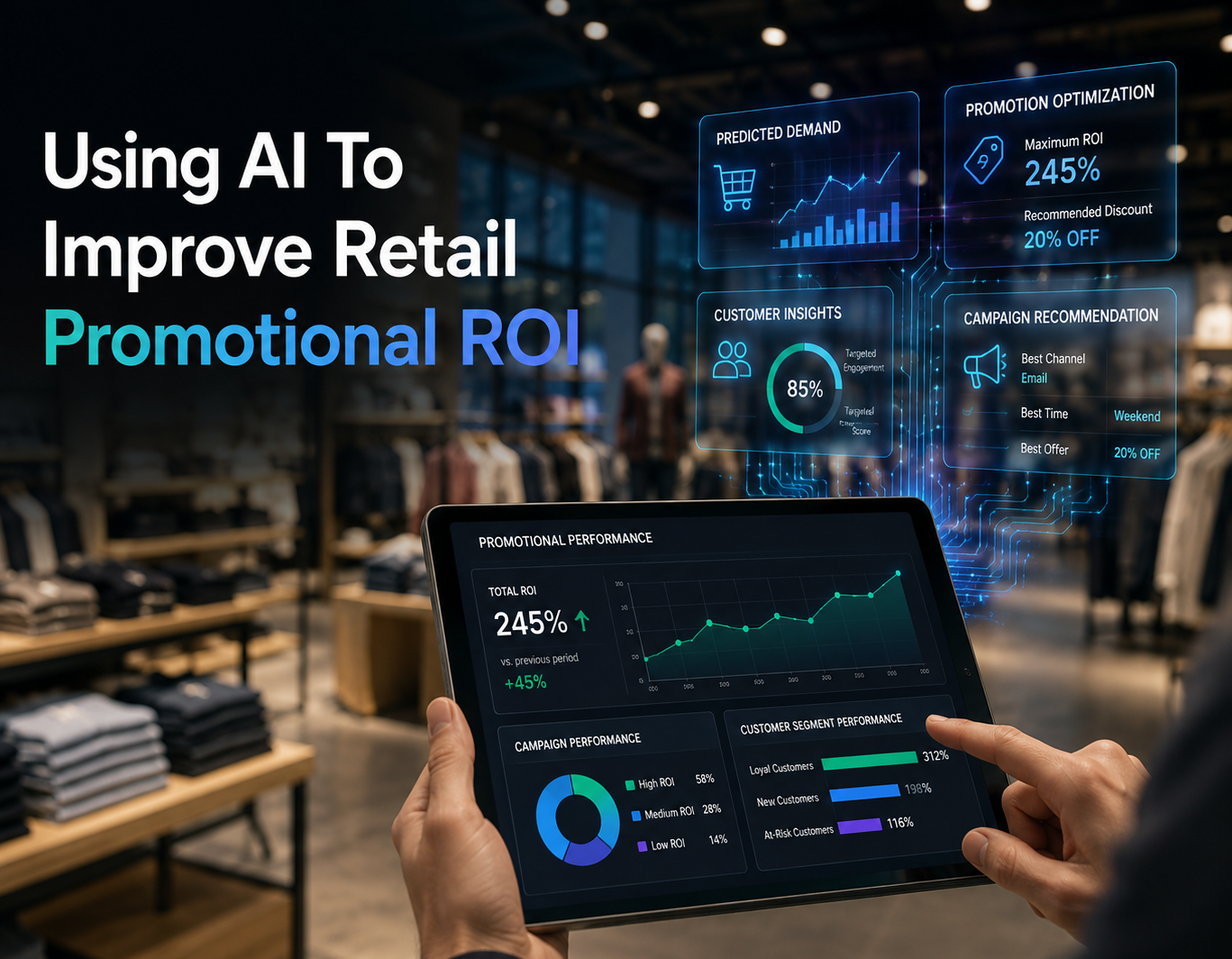
Retail promotions play an important role in attracting customers, increasing sales, clearing slow-moving products, and strengthening brand engagement. AI can help businesses analyze customer behavior, sales patterns, pricing changes, campaign results, and market conditions to improve promotional decisions. By using Retail Promotional ROI analysis, retailers can identify profitable campaigns, reduce inefficient spending, understand customer responses, and create marketing strategies that deliver stronger financial outcomes.
Retail Promotional ROI
Promotional ROI Matters for Retailers
Retailers run promotions across stores, websites, mobile applications, marketplaces, and social channels. Each campaign can involve discounts, advertising costs, loyalty incentives, free shipping, bundled products, or limited time offers. Without detailed analysis, businesses may continue investing in campaigns that generate revenue but deliver weak margins. AI helps retailers distinguish between genuine sales growth and purchases that customers would have made without the promotion. This deeper understanding allows businesses to allocate marketing budgets more effectively and focus on activities that create measurable value.
AI Improves Promotional Performance
AI can analyze sales transactions, customer profiles, product information, campaign details, pricing history, and purchasing patterns to understand promotional performance. Machine learning models can identify factors that influence campaign outcomes and estimate the likely results of future offers. Retailers can use these insights to select better products, target suitable customer groups, choose appropriate discounts, and determine effective campaign periods. AI also helps businesses recognize patterns across previous campaigns, allowing teams to learn from successful and unsuccessful promotional decisions.
Analyzing Customer Response
Customer response provides an important indicator of promotional effectiveness. AI can examine purchase frequency, order value, product preferences, browsing behavior, loyalty activity, and previous campaign interactions to understand how different customer groups respond to offers. Some shoppers may respond strongly to percentage discounts, while others may prefer loyalty rewards, bundles, or personalized incentives. Retailers can use these insights to create more relevant promotions instead of applying the same offer to every customer.
Optimizing Discount Strategies
Discount depth can directly influence revenue and profitability. A small discount may fail to motivate customers, while a large reduction can generate sales but weaken margins. AI can examine previous pricing and promotional results to understand how customers respond to different discount levels. Retailers can use these insights to identify suitable price points and avoid excessive reductions. Intelligent pricing analysis can help businesses balance customer appeal with financial performance.
Measuring Incremental Sales
A strong promotion should generate additional business rather than simply shift the timing of purchases. AI can compare promotional sales with expected baseline demand to estimate incremental revenue. Retailers can analyze what customers purchased during the campaign and compare that behavior with normal purchasing patterns. This approach gives businesses a clearer understanding of the sales that the promotion actually generated and helps them evaluate campaign effectiveness more accurately.

Improving Campaign Timing
The timing of a promotion can significantly influence its outcome. AI can analyze historical campaign results and customer activity to identify periods that may generate stronger responses. Retailers can use these insights to schedule campaigns when customer interest and purchasing potential align with promotional objectives.
Evaluating Marketing Channels
Retailers often promote offers through email, search advertising, social media, websites, mobile applications, in-store displays, and other channels. AI can compare campaign performance across these platforms and identify which channels generate stronger customer engagement and financial returns. Businesses can then allocate budgets according to actual performance rather than relying on assumptions. This approach can improve marketing efficiency and strengthen overall promotional planning.

Promotions With Inventory
A campaign can attract strong customer interest, but limited inventory may prevent the retailer from capturing the full opportunity. AI can connect promotional forecasts with stock levels, replenishment schedules, supplier lead times, and product movement. Retailers can use these insights to prepare inventory before launching major campaigns and reduce the risk of missed sales caused by insufficient stock.
Analyze Historical Campaign Performance
Retailers should examine previous promotions to understand revenue, profit, customer response, discount levels, product movement, and campaign costs. AI can identify patterns across successful and unsuccessful campaigns and highlight the factors that influenced their results.
Create Targeted Promotional Strategies
Retailers can use AI insights to identify suitable customer groups, products, discount levels, channels, and campaign periods. Targeted strategies allow businesses to provide relevant offers while reducing unnecessary promotional spending.
Challenges
Incomplete transaction records, inconsistent customer information, inaccurate campaign costs, and poor product classifications can affect analytical quality. Retailers also need to consider privacy when they analyze customer behavior. Businesses should combine AI insights with marketing expertise and continuously review model performance to maintain dependable results.