
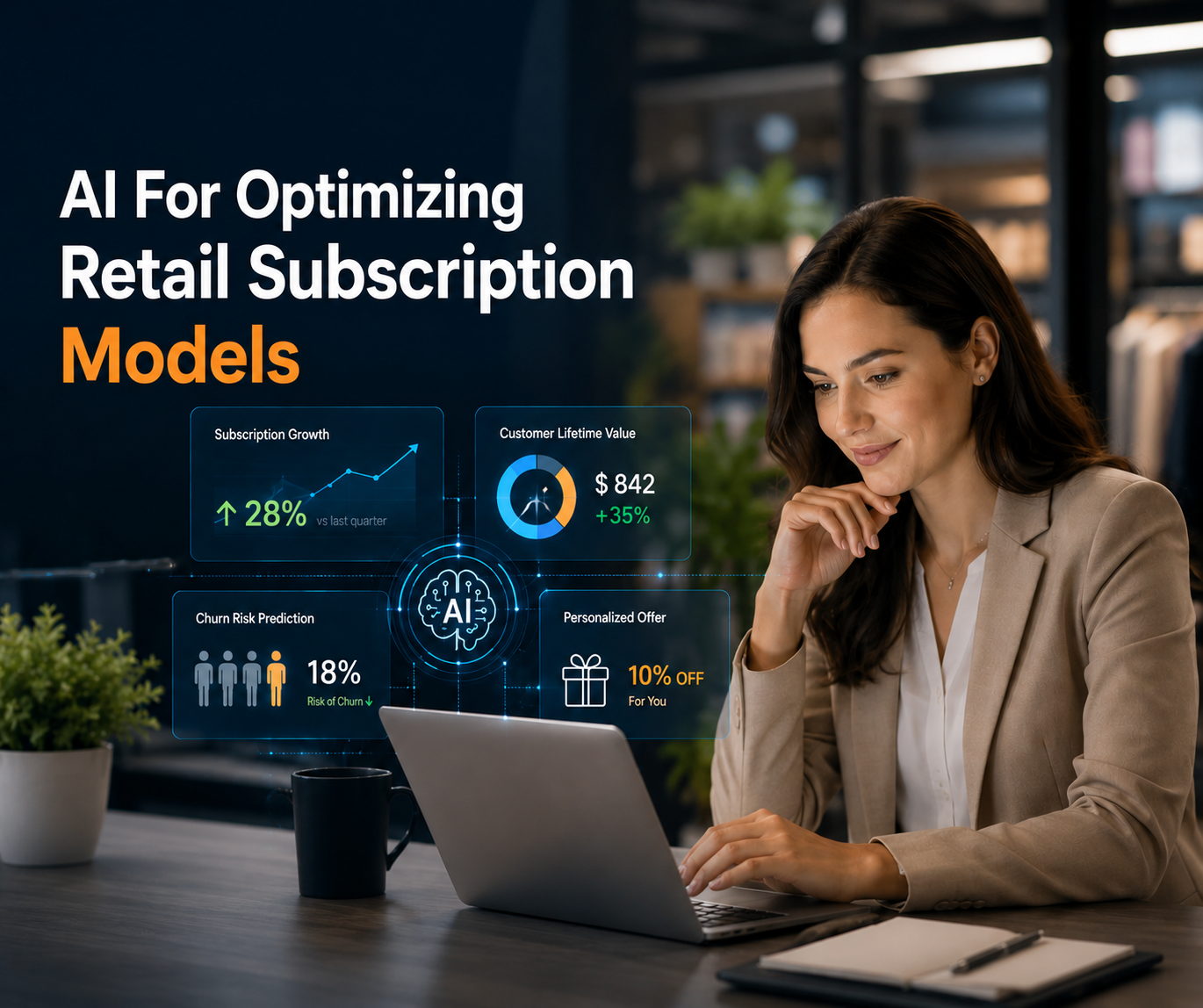
The retail landscape has shifted decisively toward recurring revenue streams, with subscription boxes and membership programs now dominating consumer spending across demographics. Maintaining profitable retention remains a formidable challenge, yet Artificial Intelligence has emerged as the essential backbone for merchants aiming to sustain growth through AI retail subscription models. Traditional methods relying on historical averages fail against volatile consumer preferences, but predictive intelligence now decodes behavioral patterns to prevent cancellations before they occur.
Retail Subscription Models
The Complexity of Modern Recurring Commerce
Subscription fatigue has become a genuine phenomenon among digitally native shoppers juggling multiple monthly commitments across various platforms. The economics of subscriptions differ starkly from one-off transactions, as acquisition costs amortize over several billing cycles, making early churn particularly devastating. This complex ecosystem demands constant calibration across pricing, assortment, and delivery frequency, yet manual oversight cannot process thousands of simultaneous signals, rendering intelligent automation essential.
Personalization Engine
Generic offerings erode subscriber trust rapidly, as modern consumers demand bespoke experiences where each delivery reflects their evolving tastes. AI retail subscription models shine through hyper-individualized curation, where machine learning clusters subscribers into micro-segments based on nuanced criteria like regional preferences or dietary restrictions. Recommendation algorithms evolve along side each interaction, digesting explicit reviews and implicit signals to refine future suggestions and drastically lower voluntary attrition.

Behavioral Triggers and Real-Time Adaptation
Subscriber behaviors fluctuate weekly, with eager unboxers potentially exhibiting sudden disengagement through delayed openings or ignored notifications. AI flags these deviations instantly and learns which interventions resonate with specific personality archetypes. This dynamic adaptability cultivates a sense of being understood, serving as the strongest adhesive for long-term loyalty.
Dynamic Pricing and Incentive Optimization
Static price points fail to capture each user’s willingness to pay, yet intelligent systems evaluate real-time elasticity to propose tailored renewal offers. Algorithms identify price-sensitive cohorts versus experience-focused ones, applying distinct strategies that maximize average revenue without irritating loyal patrons. These calculated interventions ensure financial viability while maintaining premium brand positioning.
Inventory and Supply Chain Synchronization
Unpredictable subscriber counts create logistical nightmares, where overstocking leads to waste and understocking incurs shipping delays that disappoint members. AI resolves this friction by projecting upcoming demand per SKU while anticipating supply disruptions to recommend alternative substitutions. Integrating these forecasts with warehouse operations ensures subscribers receive correct items punctually, reinforcing brand reliability.

Reducing Waste Through Predictive Replenishment
Environmental consciousness increasingly influences purchasing decisions, with subscribers appreciating minimized excess packaging and expired goods. AI replenishment models calculate precise quantities, delivering ecological benefits that double as cost-saving mechanisms. Retailers communicating these green initiatives attract ethically minded demographics who prioritize sustainability.

Measuring ROI Beyond Retention Rates
Comprehensive evaluation encompasses broader dimensions like average basket size, cross-sell conversion, and referral frequency that collectively paint a richer picture of AI impact. Tracking these indicators longitudinally reveals which refinements deliver multiplicative advantages through controlled A/B experiments. Such disciplined assessment justifies continued investment and guides iterative enhancements.
Voice and Conversational Interfaces
Emerging voice-activated assistants will permit subscribers to modify plans through natural dialogue, eliminating cumbersome web forms. AI interprets intents and executes updates instantaneously, lowering engagement barriers for less tech-savvy demographics. Consequently, subscription accessibility expands across broader audience segments.

Future Horizons
Fully autonomous agents will soon reschedule deliveries, swap flavors, or adjust billing dates without manual intervention. Federated learning will enable collaborative insights across non-competing retailers, enriching models without exposing proprietary data. These advancements promise unprecedented agility for early adopters.
Conclusion
The era of guesswork has ended, as AI retail subscription models equip merchants with extraordinary capabilities to anticipate, personalize, and retain subscribers effectively. Yet technology alone does not guarantee success—cultivating an adaptive mindset and committing to continuous experimentation differentiates winners from laggards. Retailers ready to harness these tools will emerge stronger, so the question isn’t whether to adopt AI but how quickly you can integrate its wisdom.