
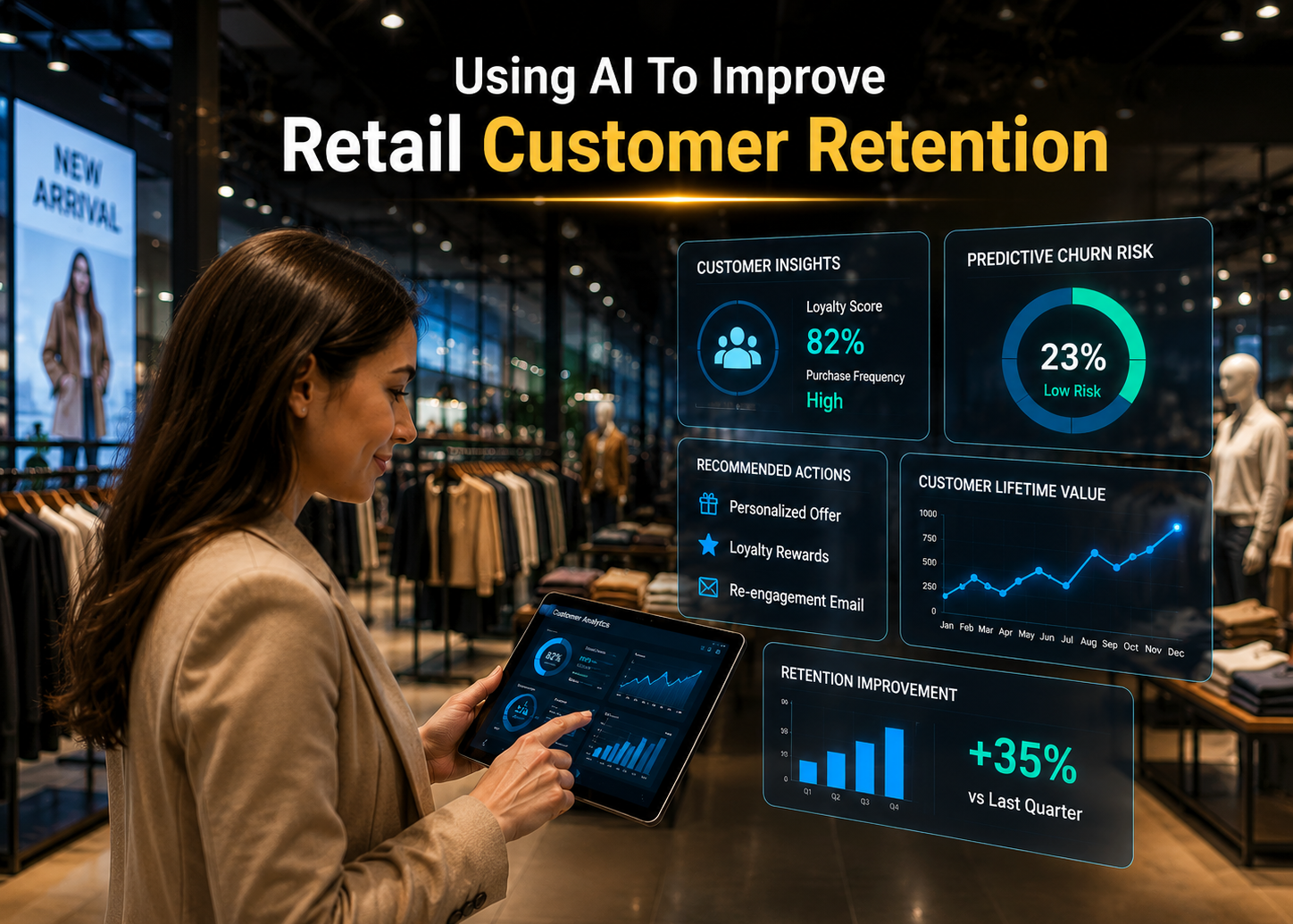
Customer loyalty plays an important role in long-term retail growth. Attracting new shoppers can require significant marketing effort, while retaining existing customers can help retailers build stronger relationships and encourage repeat purchases. Artificial intelligence can analyze large amounts of customer information and identify patterns that help businesses understand what encourages shoppers to return. Through Retail Customer Retention, retailers can use AI-driven insights to personalize experiences, identify customers who may disengage, improve communication, and create strategies that encourage lasting relationships.
Retail Customer Retention
Why Customer Retention Matters in Retail?
Retailers compete for customer attention across physical stores, websites, mobile applications, marketplaces, and social platforms. Customers can easily compare products, prices, service quality, and offers from different businesses. A poor experience can encourage shoppers to move to competitors. AI helps retailers understand customer behavior at a deeper level and identify opportunities to improve engagement. By focusing on existing customers, businesses can strengthen loyalty, encourage repeat purchases, and create more consistent revenue opportunities.

How AI Improves Customer Retention?
Predicting Customer Churn
Customer churn occurs when shoppers stop purchasing or significantly reduce their interaction with a retailer. AI can analyze changes in purchase frequency, declining engagement, reduced website activity, and other behavioral signals to identify customers who may leave. Retailers can use these predictions to take timely action and offer relevant incentives, product recommendations, or service support. Early intervention can help businesses address customer concerns before they become permanent losses.
Personalizing Customer Experiences
Personalization can make retail interactions more relevant and useful. AI can examine previous purchases, browsing patterns, category interests, and engagement history to recommend products and content that match individual preferences. Retailers can use these insights to personalize emails, website experiences, mobile notifications, and promotional messages. Relevant communication can create stronger connections and encourage customers to continue interacting with the brand.

AI Product Recommendations
Product recommendations can influence repeat purchases by helping customers discover items that match their interests. AI can analyze previous transactions and customer behavior to identify products that may appeal to individual shoppers. Retailers can display personalized recommendations across websites, mobile applications, emails, and other customer touchpoints. Accurate suggestions can improve the shopping experience while creating additional opportunities for repeat business.

Creating Targeted Offers
AI can identify customer preferences and purchasing patterns to support targeted offers. Retailers can provide suitable incentives based on product interests, purchase history, engagement levels, and shopping behavior. Targeted promotions can improve relevance while reducing unnecessary discounts for customers who may purchase without an incentive.
AI Analyze Customer Feedback
Customer feedback can reveal important information about satisfaction and retention. AI can analyze reviews, survey responses, support messages, and other feedback to identify recurring themes. Retailers can use these insights to understand common concerns related to products, delivery, pricing, website usability, or service quality. Acting on these findings can

Role
Collect and Prepare Customer Data
Businesses should gather purchase records, browsing activity, loyalty interactions, customer feedback, service history, promotional responses, and engagement information. Teams should clean the data, remove duplicate records, address missing information, and maintain consistent customer profiles.

Personalized Retention Strategies
Retailers can use AI insights to develop relevant recommendations, offers, loyalty benefits, communication, and service experiences. Personalization should reflect customer interests and engagement rather than rely on identical messages for every shopper.
Monitor and Improve Retention Performance
Businesses should track repeat purchase rates, churn levels, customer lifetime value, engagement, and campaign performance. Teams can use these results to refine retention strategies and improve customer experiences over time.

Customer Retention Success
Retailers can evaluate retention performance through repeat purchase rates, customer churn, purchase frequency, average order value, loyalty engagement, customer lifetime value, and customer satisfaction. Comparing these indicators across customer segments can help businesses understand which strategies generate meaningful improvements. Regular measurement also allows retailers to refine their approach and focus on activities that create lasting value.
Improving Customer Lifetime Value
AI can analyze purchasing behavior and engagement patterns to estimate future value and identify factors that influence long-term loyalty. Retailers can use these insights to improve retention strategies, personalize experiences, and focus resources on activities that encourage sustainable customer relationships.