
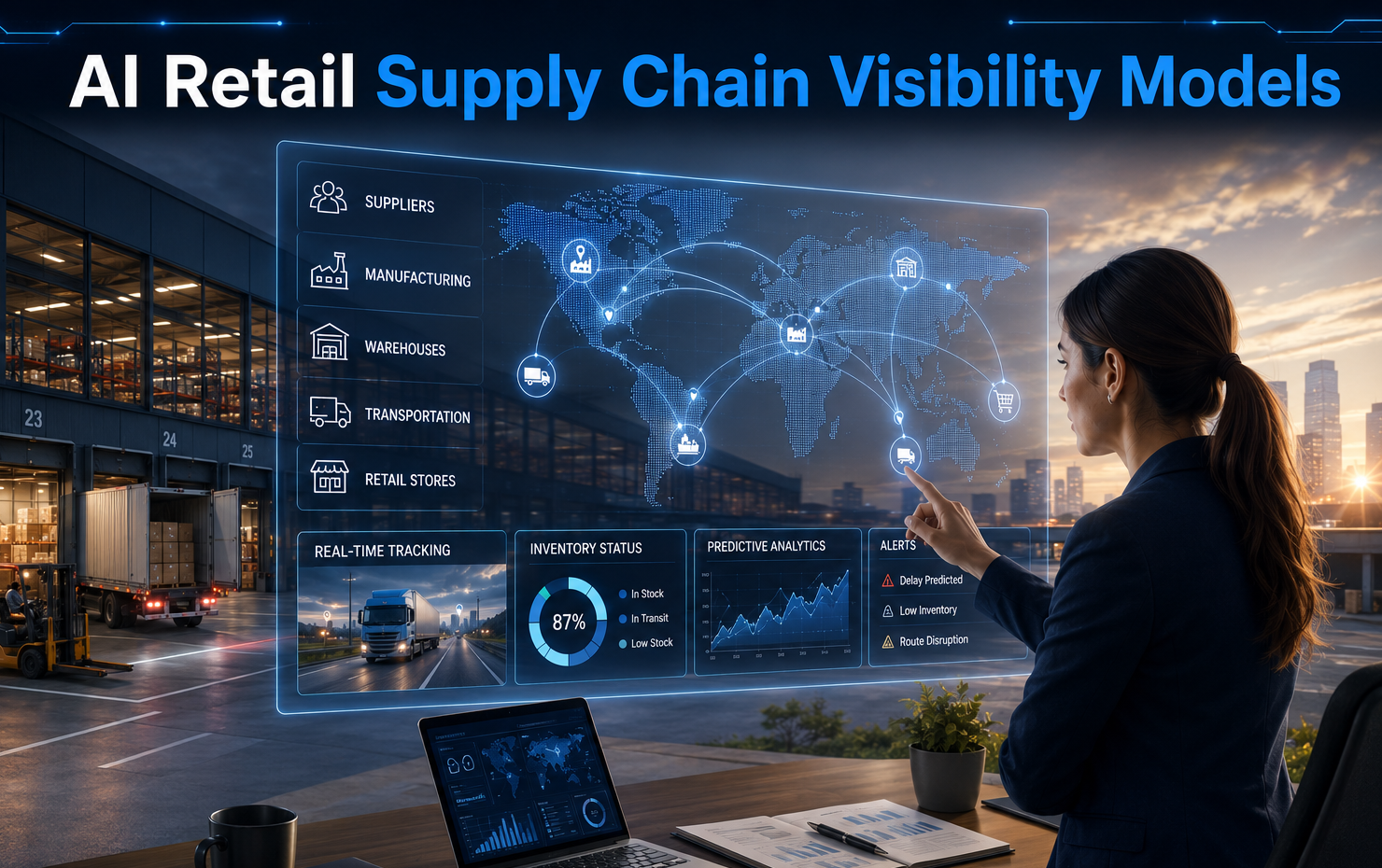
Retail supply chains now span suppliers, factories, distribution centers, stores, marketplaces, delivery partners, and digital channels. Each stage produces valuable information, yet fragmented systems can make it difficult to understand what is happening across the entire network. Artificial intelligence can connect these signals, identify changes, predict disruptions, and help teams act before small issues become costly problems. Retail Supply Chain Visibility gives decision-makers a clearer view of inventory, orders, transportation, supplier activity, and customer demand. When AI strengthens that visibility, retailers can replace delayed reactions with faster, evidence-based decisions.
Retail Supply Chain Visibility
Real-Time Inventory Visibility
Inventory can exist in stores, distribution centers, transit, supplier locations, fulfillment facilities, and customer orders. AI visibility models can bring these positions together to create a more accurate picture of available and expected stock. The system can distinguish physical quantities from reserved, damaged, blocked, or otherwise unavailable units. Real-time signals can also highlight unusual inventory changes. Better visibility helps planners make informed allocation decisions and reduces the risk of relying on outdated stock information.

Demand Sensing And Forecasting
AI can enrich demand estimates with current signals such as search activity, product engagement, promotion calendars, weather information, local events, price changes, and recent order behavior where appropriate. Demand sensing can identify short-term shifts that a conventional forecast may miss. More responsive estimates help retailers adjust replenishment, allocation, procurement, and fulfillment plans. Forecasts should remain transparent enough for planners to understand important drivers and challenge unusual results.
Supplier Visibility And Risk Detection
Supplier performance can influence availability, lead times, quality, and overall network stability. AI can analyze purchase orders, shipment records, lead-time history, communication patterns, quality incidents, and other relevant indicators to identify emerging concerns. Risk models can assign probability to potential delays or disruptions and help teams prioritize suppliers that need attention. Human review can add context, especially when relationships, contractual commitments, or temporary events affect the underlying data.
Connected Data Foundation
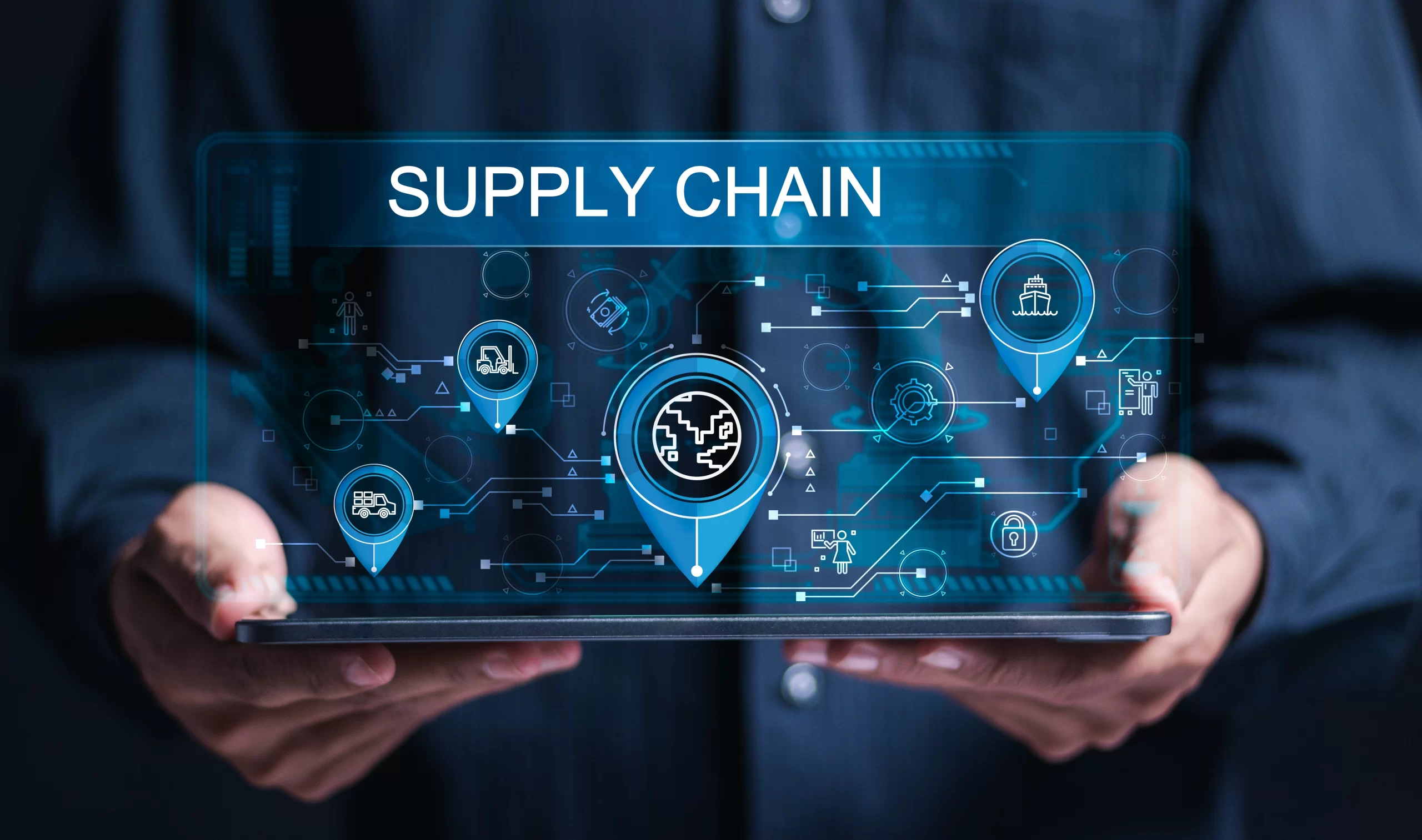
An effective visibility model requires dependable information from multiple sources. Retailers may need data from enterprise systems, warehouse platforms, transportation tools, supplier portals, point-of-sale applications, ecommerce platforms, inventory services, and external logistics partners. Common identifiers and shared definitions help connect these records. Data pipelines should also account for timing because delayed events can create false impressions about inventory or shipment status.
Predictive Risk Management
Visibility becomes more valuable when it helps teams anticipate what could happen next. Predictive models can estimate the likelihood of stockouts, late deliveries, supplier delays, demand spikes, capacity constraints, and other disruptions. Scenario analysis can then help planners compare potential responses. Retailers should monitor model accuracy and recalibrate systems as conditions change. A prediction should support preparedness rather than create false certainty.

Omnichannel Supply Chain Visibility
Retailers increasingly serve customers through stores, websites, applications, marketplaces, and other routes. Each channel can draw from shared inventory and fulfillment resources. AI can help coordinate these demands by showing where stock sits, where orders originate, and which fulfillment paths may create the best balance of speed and cost. Omnichannel visibility reduces the chance that one channel makes decisions without understanding the effect on the wider network.
Inventory Risk And Stockout Prevention
Stockouts can reduce revenue and damage customer trust, while excessive inventory can tie up capital and increase markdown or storage costs. AI can combine demand forecasts, lead times, current stock, inbound quantities, and channel priorities to identify products with elevated availability risk. The strongest models consider both service requirements and financial consequences instead of optimizing inventory levels in isolation.
Decision Support
A supply chain control tower brings important operational information into a shared decision environment. AI can enhance this concept by ranking exceptions, explaining changes, predicting risks, and recommending possible next steps. The objective should not be to create another dashboard filled with alerts. A useful control tower highlights what matters, why it matters, and what action may reduce the impact. Clear workflows help teams move from observation to resolution.

Data Quality And Governance
AI cannot produce reliable visibility from unreliable information. Retailers should establish validation checks, data ownership, lineage, access controls, and monitoring routines. Governance should also define how teams use customer, supplier, shipment, and operational information. Strong controls increase confidence in analytical outputs and reduce the risk of poor decisions based on inaccurate records.
Cost & Working Capital Optimization
Supply chain visibility should support financial outcomes as well as operational control. AI can help estimate the cost of holding inventory, moving products between locations, using expedited transportation, or carrying excess safety stock. When these costs appear alongside service risks, teams can evaluate trade-offs more effectively. A decision that improves availability but creates excessive logistics expense may not produce sustainable value. Visibility should therefore connect operational events with financial consequences.

Privacy, Security, And Responsible AI
Supply chain platforms may contain commercially sensitive information and, in some cases, customer-related records. Retailers should protect access, use appropriate security controls, and apply privacy principles to any personal information involved in the workflow. Responsible practices help protect business relationships and customer trust while supporting sustainable technology adoption.

Conclusion
AI can transform supply chain visibility from a historical reporting function into a proactive decision capability. Retail Supply Chain Visibility becomes more valuable when retailers connect inventory, demand, supplier, transportation, warehouse, fulfillment, and customer signals within a trusted analytical environment. Predictive models can identify risks earlier, while intelligent prioritization can help teams focus on the events that matter most. By combining strong data foundations with practical workflows and responsible AI, retailers can improve resilience, service reliability, operational efficiency, and long-term commercial performance.